
How Does a Child Work Out Who Someone Really Is?
Learning to look beyond appearances is an important part of learning to read.
Learning to look beyond appearances is an important part of learning to read.

Seven years. That was the training, not the delay.

The safest place to think about scary things is in a story.

Knowing it is true is not the same as accepting it is finished.

The cost is part of what makes it a choice.
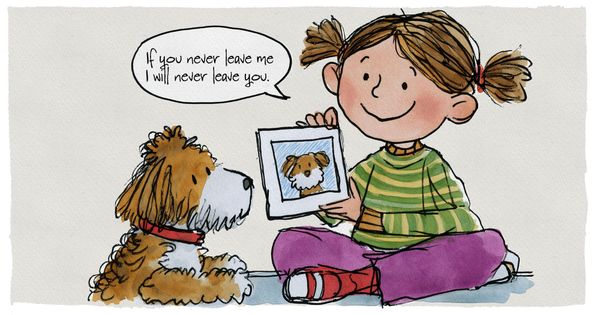
By the fourth time the story reads the same sentence, they are saying it with you.
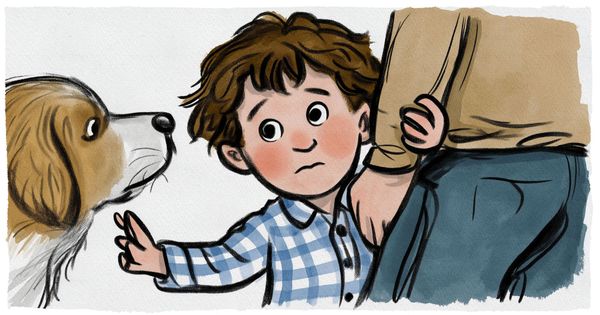
You may be looking for one emotion, when multiple emotions are driving behavior.
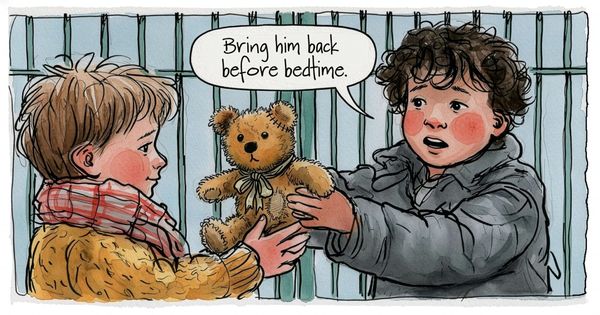
A promise cannot guarantee what will happen, but it can set expectations.

The two endings begin at the two doors.

The first sentence may not be the whole answer.

Stories give children a way to show you what is really going on.

Yes. A pencil can show you what words cannot.
blog
Good judgement is a skill. It can be learned.

blog
A month’s worth of watching, gathered into one answer. Seeing, interpreting, predicting, solving — four skills that all run before reading, and often instead of it.

blog
For the child who won’t try unless they’re sure they’ll get it right. The fix isn’t arguing about wrong answers — it’s play where wondering matters more than being right.

blog
The playground teaches kids that winning belongs to whoever is bigger, faster or louder. There is another option nobody mentions: change the game.

blog
Something I had to unlearn as a parent before I could write about it. The collapse at 3:15 is trust arriving late and messy, not a discipline problem.

blog
Choosing to pretend is different from having to pretend.

blog
Your child holds it together all day somewhere else, then unravels with you. Both descriptions are true, and the collapse at home is not the bad news.

blog
A problem I watched up close, and learned to name differently. Understanding a moment and reporting it in order are two different jobs.

blog
Lots of kids shut down the second you ask “what happened?” It sounds like a test with a right answer. There is a way to talk about a story that doesn’t.

blog
Your child may understand much more than you think. Going quiet is often the opposite of checking out — it is the sound of two realities being held at once.
blog
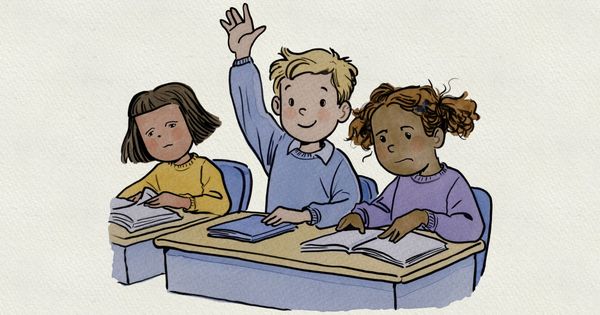
Meet the hero I wrote because my own kids needed one. A child who struggles to read is not a child who struggles to think.
blog
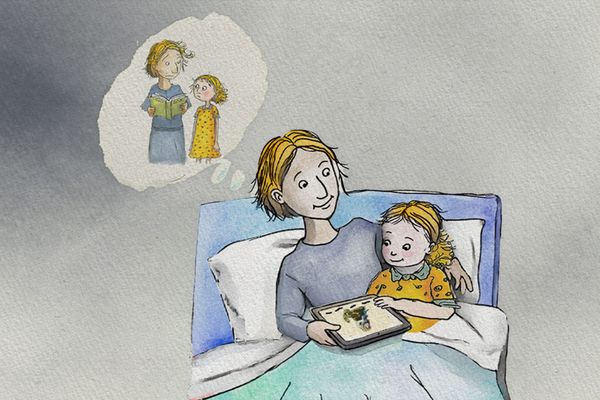
Help the child who hates reading before the book even opens. A read-along takes decoding out of the room and lets the story win first.
Traditional Tales for Modern Times
Early language arts curriculum for visual learners and late readers, built around 16 illustrated fairy tales.
Read-along videos, articles about helping late readers, and three learning activities every week. Free — and it is just an email. No password, no credit card.
Unsubscribe any time.