What If a Scary Story Is the Safe Place Your Child Needs?
The safest place to think about scary things is in a story.

You reach the part with real danger in it and hesitate. You skip a sentence. You decide this book can wait another year. That instinct makes sense. But a story lets a child stand next to danger without being in any. The frightening thing can enter the room, and it still cannot reach them.
The Job Is What Makes the Danger Manageable
In The Kind Boy Teams Up with the Fairy King, Death comes to take the princess. Death is not softened into a misunderstanding. A hooded figure stands in the doorway with a staff. It is a bit scary, but that is what gets the child thinking hard about what is going to happen.
The Kind Boy has turned the princess around. The Fairy King now stands at her feet. What will Death see? What will Death do? What happens to the princess? This anticipation is what gets the reader thinking. What could happen next?
The Trick Does Not Settle Everything
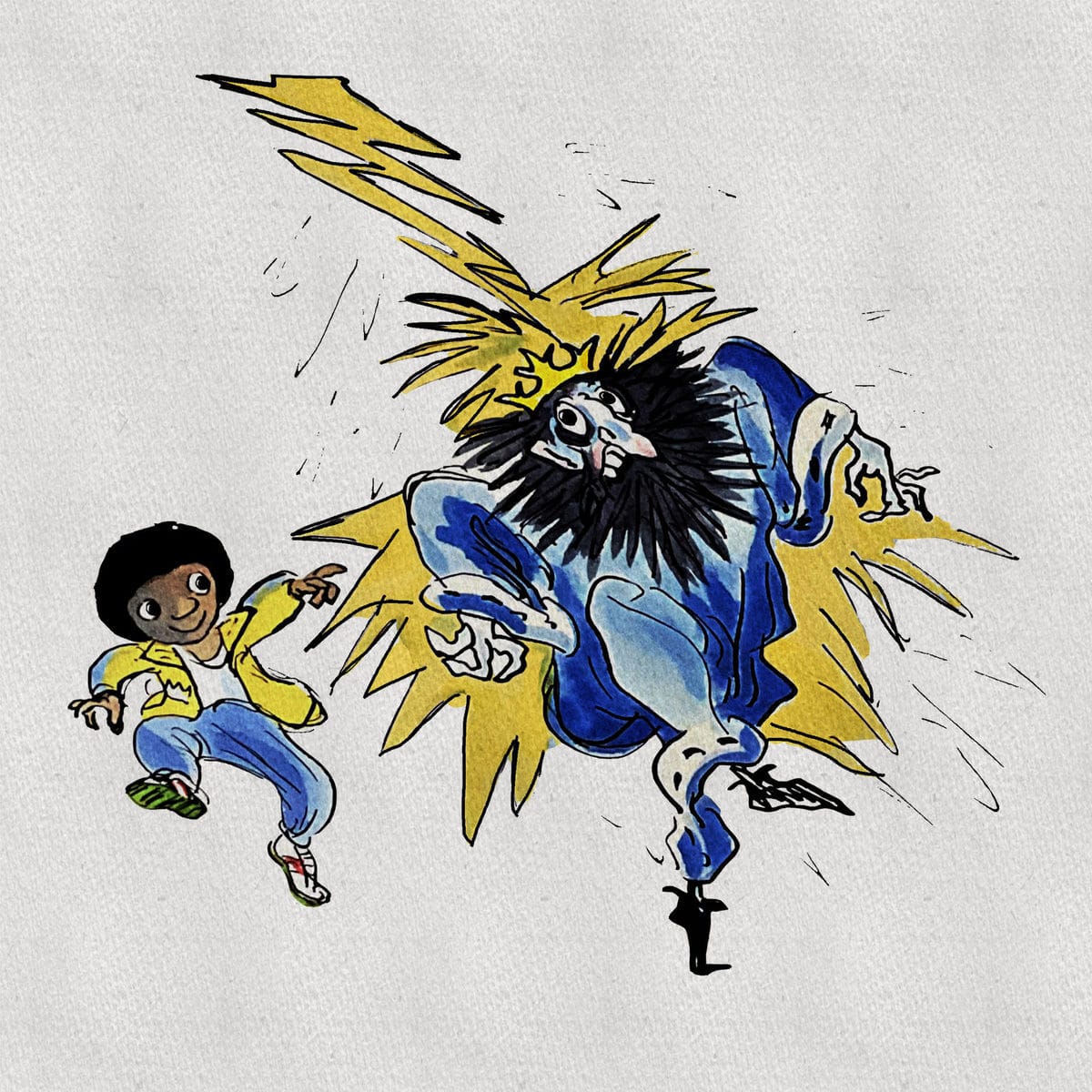
Death sees the Fairy King at the princess’s feet and leaves without her. The Kind Boy’s plan works, but the story does not pretend that danger has disappeared. Death returns furious. “You have interfered with the order of the universe. I am owed one more soul today. It’s her or you!” The Kind Boy does not want to die. But he loves her, so he offers himself instead. The Kind Boy’s willingness to take the princess’s place shows what he is prepared to pay.
Then lightning strikes the greedy king, and the Kind Boy tells Death to take him. His willingness to sacrifice has a reward. This makes it a better story than one where the monster simply vanishes.
Death Looks Too
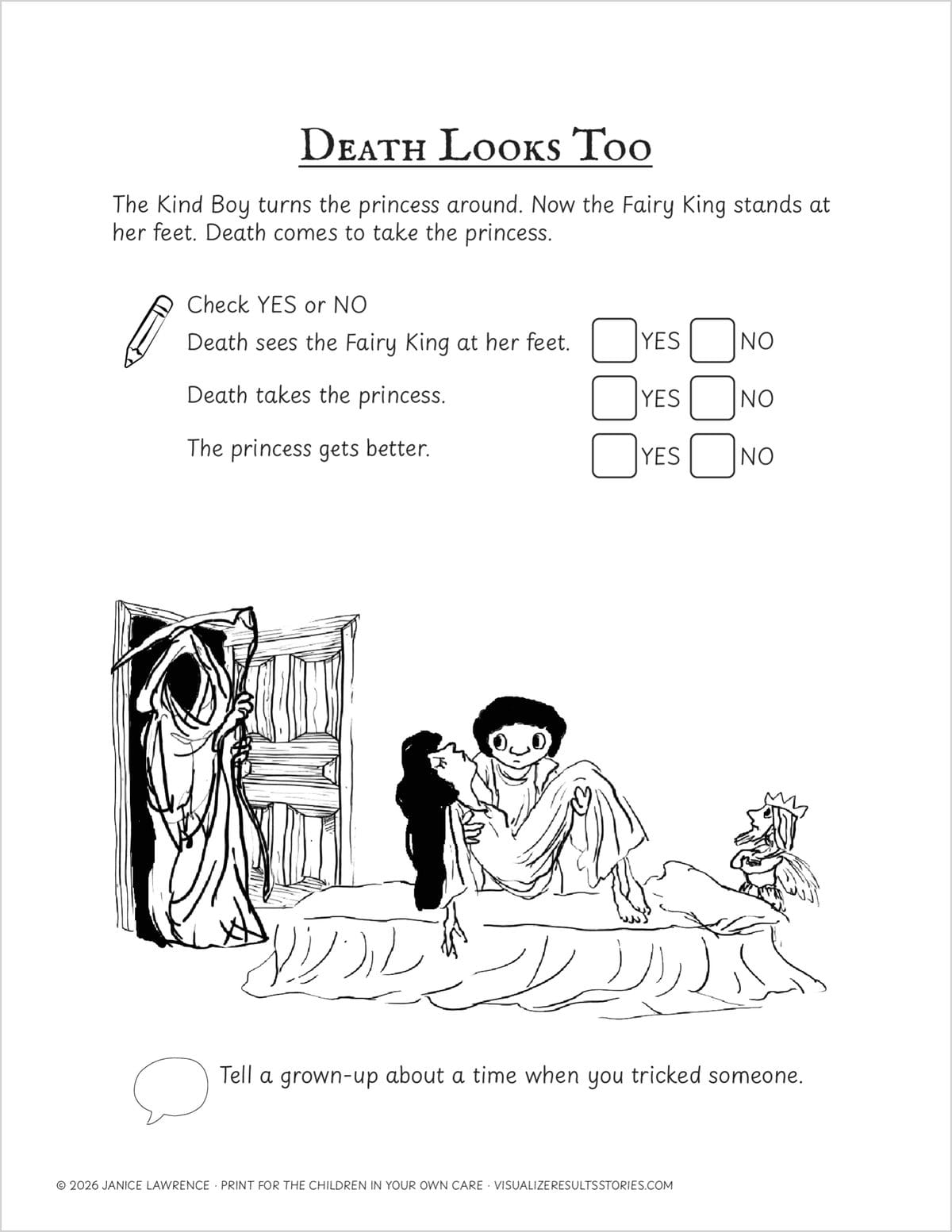
The free activity returns to the moment when Death first enters the doorway. Your child has to use the established rule of where the Fairy King is standing to predict what will happen next. This may be hard for some children because Death is a scary character. The fear may cloud their judgement, and that is the point.
The three questions divide the plan into visible cause and effect. Death sees the Fairy King at the foot, decides not to take the princess, and leaves the Kind Boy time to heal her. If your child answers one item differently, ask what Death can actually see before reviewing the rule. Then let your child look again. A wrong answer may show that they remembered the danger but lost track of the rule.
Pause Where the Rule Changes

When you watch the read-along, stop as the Kind Boy lifts the princess. Ask: “Where was her head before?” “Where are her feet now?” “What will Death see?”
Your child may feel uneasy. Safe does not mean unafraid. It means the child can look, ask, predict, close the book and return when they are ready.
Does This Sound Like Your Child
This activity may help a child who:
- Feels uneasy about a scary picture but keeps looking. The story gives the child control over how long to stay with the danger.
- Remembers the frightening character and loses track of the rule. The three questions put the cause and effect back into order.
- Predicts more easily from positions than from words. Head and feet make the rule visible.
- Needs to pause, close the book or return later. Stopping does not mean the child failed to understand the story.
- Asks the same question about the danger more than once. Repetition can be how the child checks that the rule and the ending have not changed.