What If the Line Your Child Keeps Repeating Is the One That Matters Most?
By the fourth time the story reads the same sentence, they are saying it with you.

In the story, The Kind Boy Escapes the Witch, one phrase is repeated over and over again: “If you never leave me, I will never leave you.” This refrain builds the core message of loyalty throughout the story. As the story is read your child begins to say it before the character does. They know the pause. They know the rhythm. By the fourth time, the line belongs partly to them.
Adults sometimes hear repetition and ask for something new. But out of every sentence in the book, this is the one the child chooses to keep.
The Promise Comes Back Four Times
In The Kind Boy Escapes the Witch, the housemaid comes to the Kind Boy’s room at night. Before she tells him that the witch plans to boil him, she asks, “Will you love me forever?” He promises: “If you never leave me, I will never leave you.” She answers, “Neither now nor ever, will I leave you.”
Only then does she warn him. She is about to lose her room, her work and any way back to the life she knows. Before she takes that risk, she needs to hear that she will not be left alone. The same promise returns before each of the three wishes. The words do not change. The danger does.
Let the Refrain Arrive
The first time you watch, do not point out the repeated line. Let your child find it. If they begin speaking with the characters, keep going.

On another viewing, pause after the housemaid asks whether he will love her forever. Ask, “Why does she need to know before she tells him the secret?” Later, ask, “Why do they say the promise again before every wish?”
At the end, ask the question the story refuses to avoid: “Did the Kind Boy and the housemaid keep their promises?”
The Kind Boy uses his last wish to turn himself into a pond and the housemaid into a duck. This causes the witch to drown. They are safe, but there are no wishes left. The book still calls it a happy ending because they kept their promises and they stayed together. It is a nontraditional interpretation of the idea of happily ever after.
If You Never Leave Me
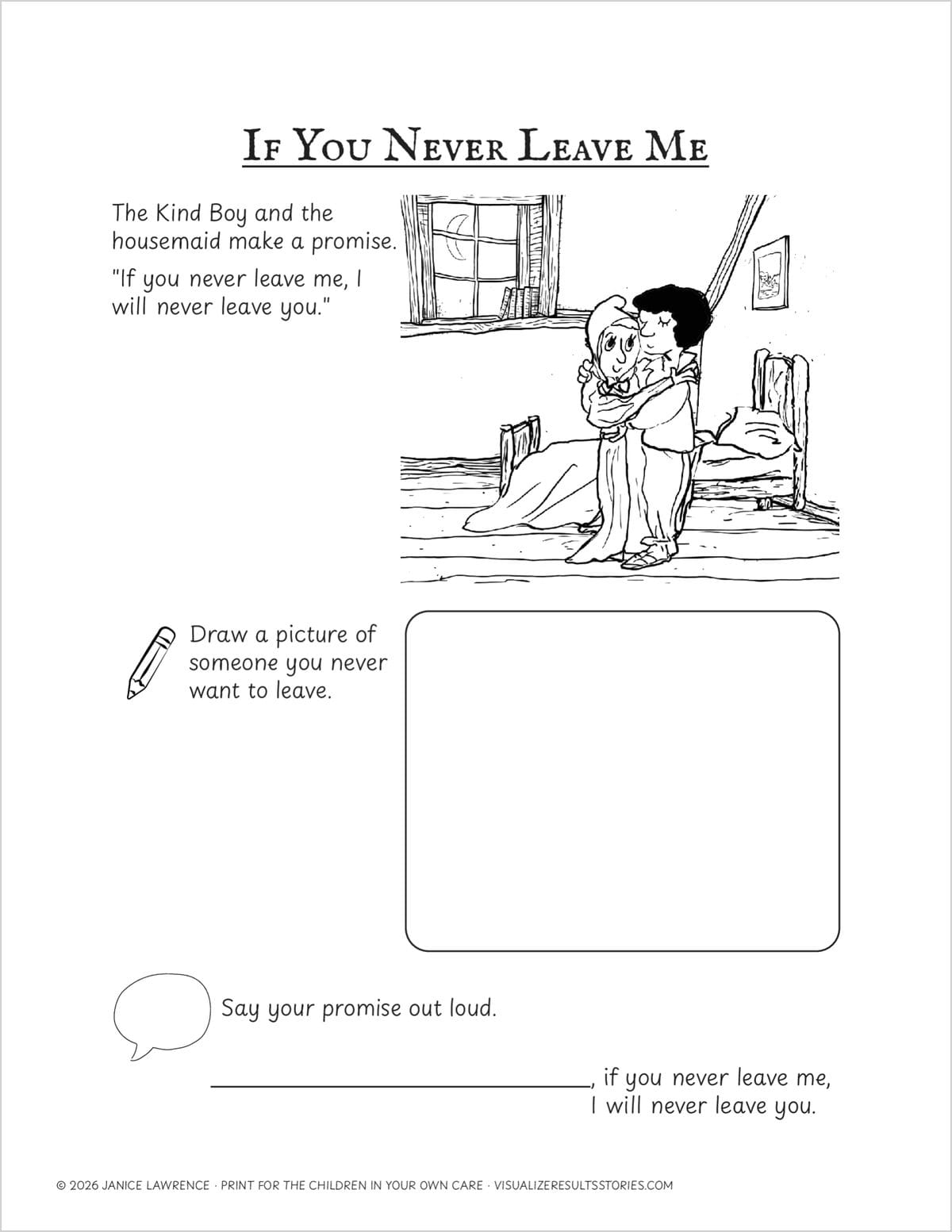
The free activity gives the repeated line to your child. The page shows the Kind Boy and the housemaid embracing beside the bed. Below it is a large box where your child can draw someone they never want to leave.
Then comes the promise: “________, if you never leave me, I will never leave you.” Writing the name is optional. Your child can point to the drawing. They can say the line aloud, whisper it, ask you to say it with them, or leave the answer in the picture.
Do not require an explanation. The drawing is already an answer.
A Sentence Can Be a Place to Put Something Important

This activity uses the Learning Action Expressing. Expressing means putting an important thought into words or pictures. It does not mean performing the thought for an audience.
For a child who has had promises broken, this page is not a cure or a technique. It is one promise with the words already supplied, and the child gets to choose who belongs inside it.
Does This Sound Like Your Child
This activity may help a child who:
- Repeats the same line from a favorite story. The repetition may be the child's way of holding on to the part that matters most.
- Joins a refrain before answering an open question. The rhythm supplies words the child does not have to build from nothing.
- Wants to express attachment without explaining it. The drawing and repeated promise can carry the thought together.
- Finds drawing easier than speaking. The person in the picture can be the answer.
- Wants the answer to remain private. The page can be completed without naming, showing or discussing the person chosen.