What If Doing the Right Thing Costs Your Child Something and You Let It?
The cost is part of what makes it a choice.
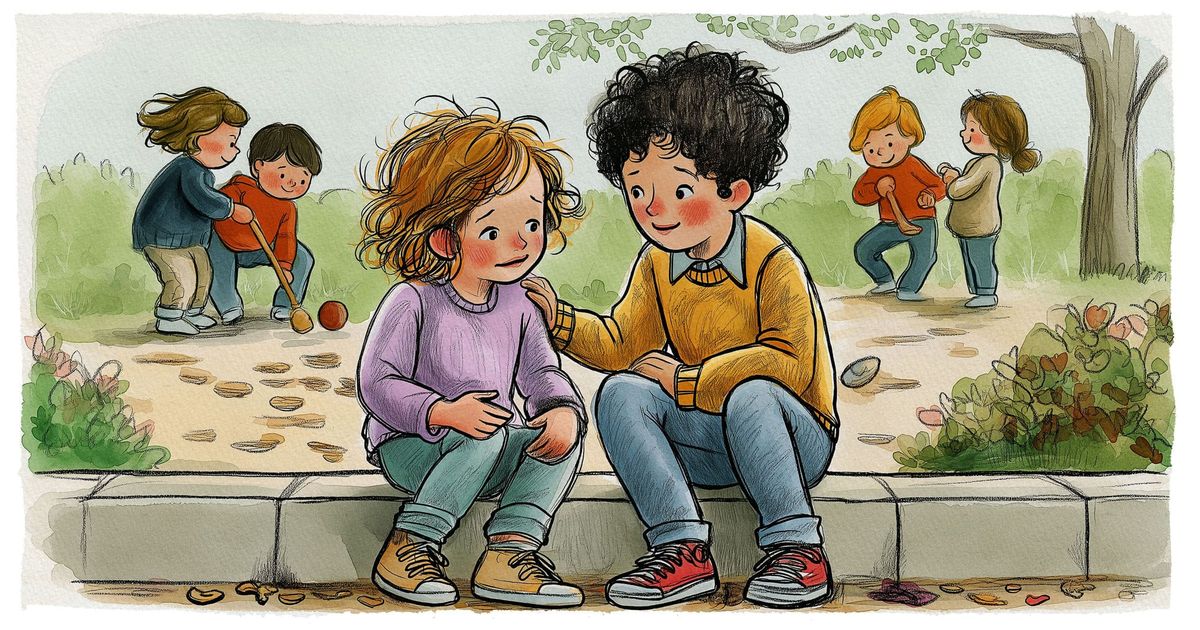
My autistic son was a fast runner. He just did not care very much about winning. During one race, a boy on the opposing team fell and twisted his ankle. Sam stopped. He helped the boy up and supported him all the way to the finish area where a medic could take over. The coach yelled at him. Sam had given up his race to help someone from the other team. No one thought he was a hero for that but me.
Years later, Sam is still helping people. Long after his teammates stopped running, he volunteers every week to help people with degenerative diseases exercise. The race did not reveal that he lacked a competitive instinct. It revealed what he thought running was for.
Kindness Does Not Always End Well for Everyone
Children are often given stories in which the kind choice is immediately rewarded. Share the toy and everyone becomes friends. Help the stranger and receive a prize. Tell the truth and the grown-up understands.
Sometimes that happens. Sometimes the kind choice costs a race. Removing every cost may protect a child from disappointment, but it can also hide the size of the decision they made. Sam knew there was a race. He stopped anyway.
What the Housemaid Lost
In The Kind Boy Escapes the Witch, the housemaid notices the witch drawing extra water from the well. She suspects what the water is for, goes to the Kind Boy’s room in the middle of the night and warns him. They run. When the witch enters the room, the kettle is boiling, the bed is empty and the housemaid is gone too.
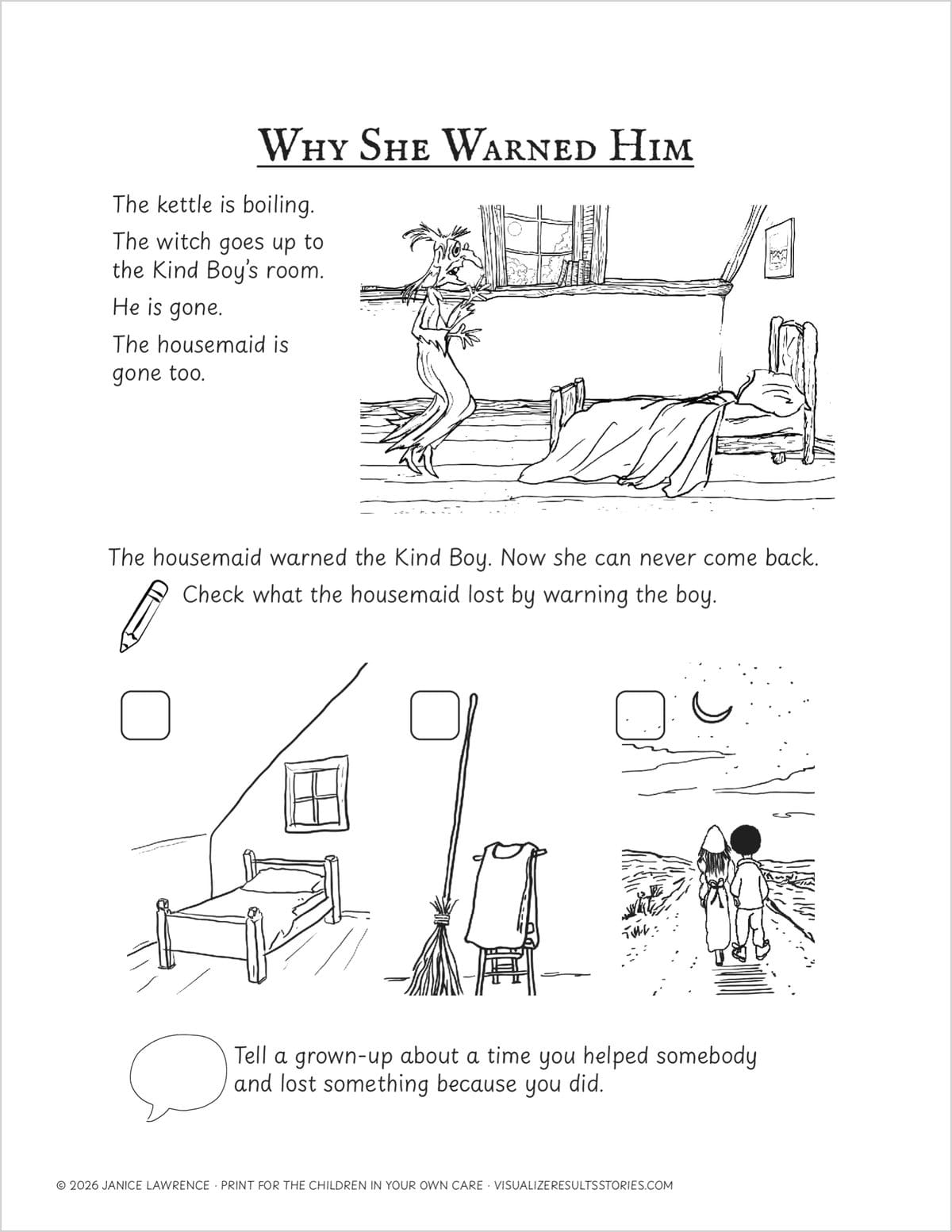
Today’s free download activity says it plainly: “The housemaid warned the Kind Boy. Now she can never come back.” Below those words are three pictures: her attic bed, her broom and apron, and the road out of town. Your child checks what she lost by warning him.
The loss is not vague. It can be counted. A room. A job. The way back.
After your child checks the pictures, ask, “Which loss do you think was hardest for her?” The answer may not be the one you expect. A child who has moved may choose the bed. A child who depends on routines may choose the job. Another child may point to the road because never coming back is the part that matters.
Then use the question printed on the page: “Tell a grown-up about a time you helped somebody and lost something because you did.” Do not rush to turn the loss into a victory. Listen first. The child may still believe the choice was right and wish it had cost less.
When to Step In

Letting a choice cost something does not mean letting a child be harmed. Adults still step in when something is unsafe or the price is too high. But not every lost turn, missed point or disappointed coach needs to be repaired. Sometimes the cost shows us what the child valued more. Life and sport are not only about winning. My son understood that before and after the adults at the race did.
Does This Sound Like Your Child
This activity may help a child who:
- Helps even when nobody is watching. The activity recognizes the value behind the choice instead of measuring only the reward.
- Is troubled when the right choice has an unfair result. The housemaid's losses make room for kindness and disappointment at the same time.
- Notices one loss more strongly than the others. Choosing the bed, the work or the way home shows what mattered to the child in the picture.
- Needs time before turning a difficult experience into a lesson. The grown-up listens to what it cost before explaining why the choice was worthwhile.
- Has helped someone and still wishes it had cost less. The activity does not require regret or gratitude. Both truths can remain.