What If Being Slow Is Not an Indication of Failure?
Seven years. That was the training, not the delay.
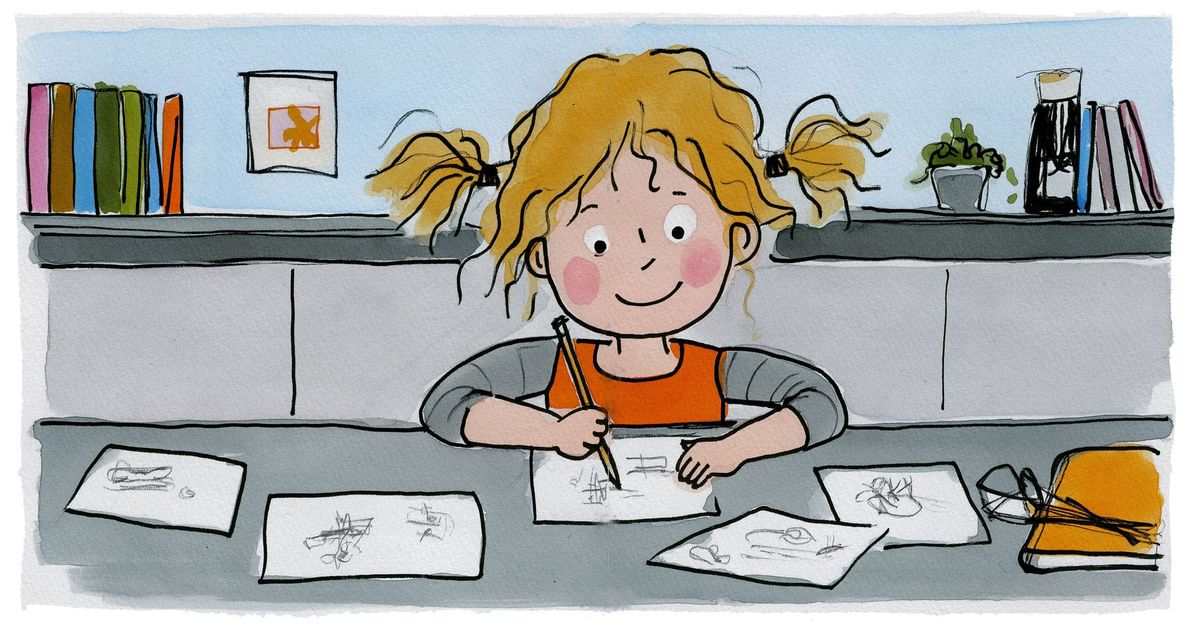
All of my children are deep thinkers. They do not answer quickly. They take in the question, turn it over and give an answer that is complete, genuine and nuanced. In school, that can look slow. A sensitive nature does not necessarily put a child at the top of the class. School rewards the answer that arrives on time and fits inside the space provided.
The real world may ask for something else. Sensitivity can become the foundation of a great bedside manner, a successful career or an insightful documentary. The qualities that slow the answer down may be the same qualities that make the eventual work worth noticing.
The Middle Is Usually Missing
Children see finished skill everywhere. The book is printed. The song is performed. The painting hangs on the wall. The person who knows what to do appears to have always known. The years of mistakes, repetition, uncertainty and practice are usually cut from the story. Then a child looks at the finished result of their efforts and assumes that taking longer means they are failing. Slow and behind are not the same measurement.
Seven Years in One Sentence
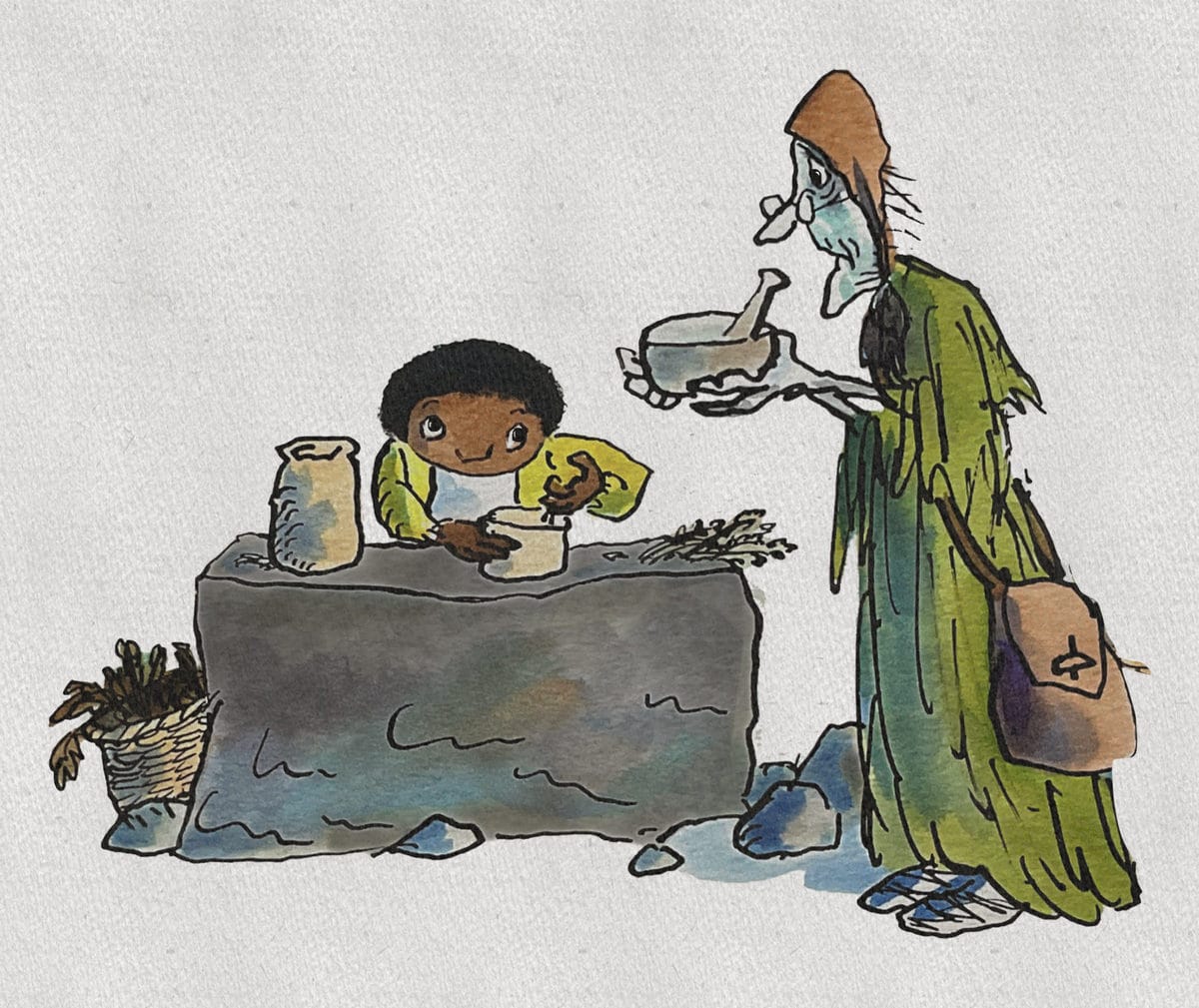
In The Kind Boy Teams Up with the Fairy King, the boy leaves home and takes the forest path because he is tired of greedy men. In a cave, he meets an old healer surrounded by baskets of herbs. The Kind Boy decides that he wants to become a healer. The story gives his training one sentence: he spends seven years in the cave learning how to use plants to cure sick people. Seven years is not the part where nothing happens. It is where he becomes.
When he later cures the Fairy King, he is offered gold or silver. He refuses both. “It is my job to make people well,” he says. The only reward he wants is to improve his skill as a doctor. He does not ask to be finished. He asks to become better.
Seven Years of Practice
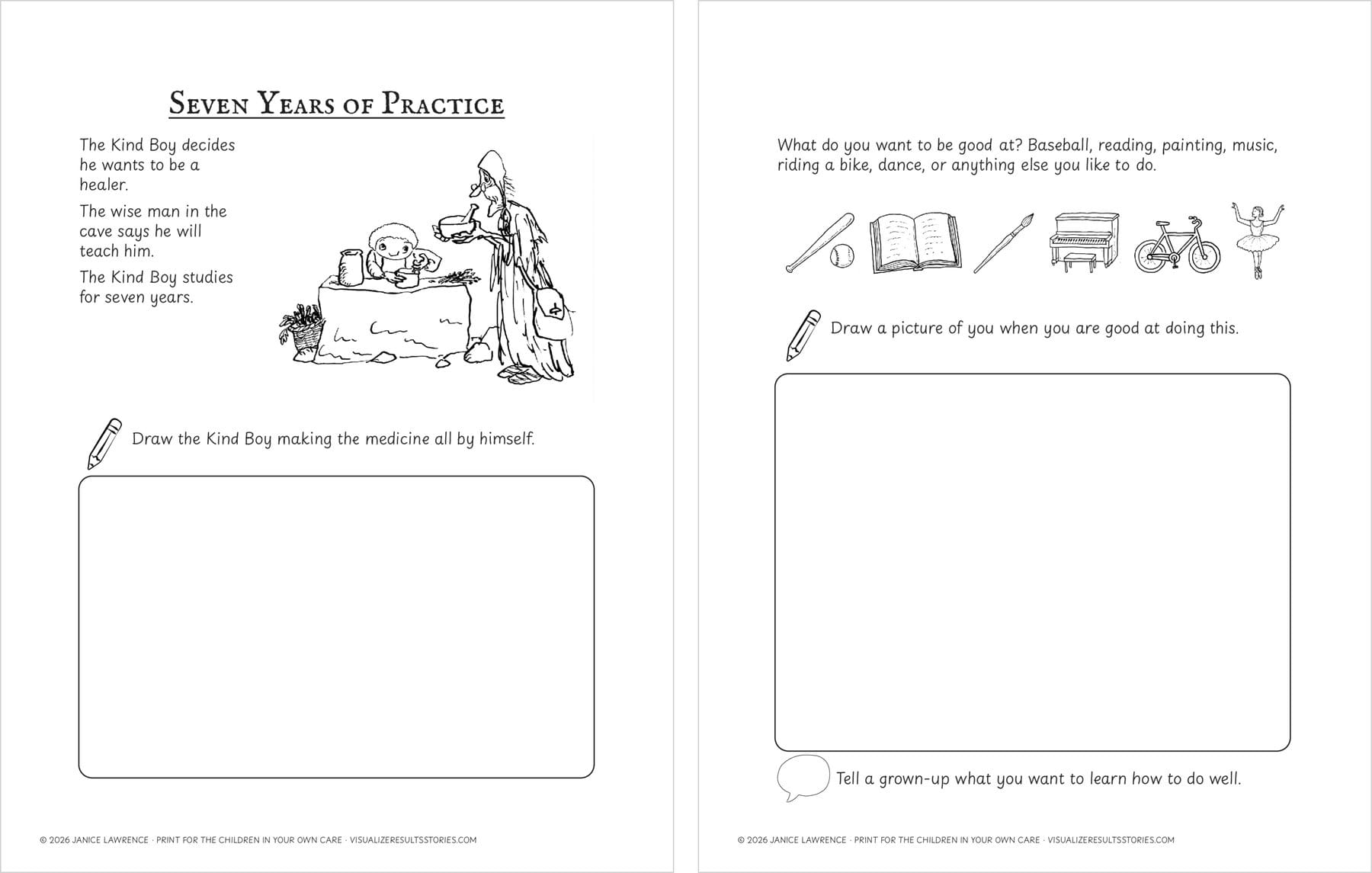
The first page of the free activity asks your child to draw the part the story skipped: the Kind Boy making medicine all by himself. What belongs in that picture? A careful hand? A pile of herbs? A teacher watching? A spilled bowl and another try? The page gives your child room to imagine what learning looked like before the skill was complete.
The second page asks what your child wants to become good at. It offers baseball, reading, painting, music, riding a bike and dance, but the choice can be anything. Then your child draws themselves when they are good at it. Afterward, ask, “What happened between now and that picture?” Do not supply the years for them. Listen for what they believe learning requires.
Notice What Takes Time

A slower answer may need support. A child may need the question repeated, fewer words, a picture or more time to respond. None of that tells you the answer will be shallow.
Watch what arrives when the child is not hurried. Do they notice something other people missed? Do they connect the question to something that happened last week? Do they give you an answer that changes how you understand the problem?
The time was not empty. They were thinking.
Does This Sound Like Your Child
This activity may help a child who:
- Answers slowly and then gives you more than you expected. The time before the answer may be where the child is building it.
- Sees finished work and assumes the skill arrived finished too. Drawing the missing seven years makes practice visible.
- Becomes discouraged when improvement is gradual. The activity moves attention from the finished result to what happens between attempts.
- Learns more easily by imagining a process. The skipped part of the story becomes a picture the child can construct.
- Needs the question repeated, shortened or shown in a picture. Those supports change how the child receives the question, not the depth of the eventual answer.