What If Your Child Refusing to Accept “It Can’t Be Done” Isn’t Defiance?
Knowing it is true is not the same as accepting it is finished.
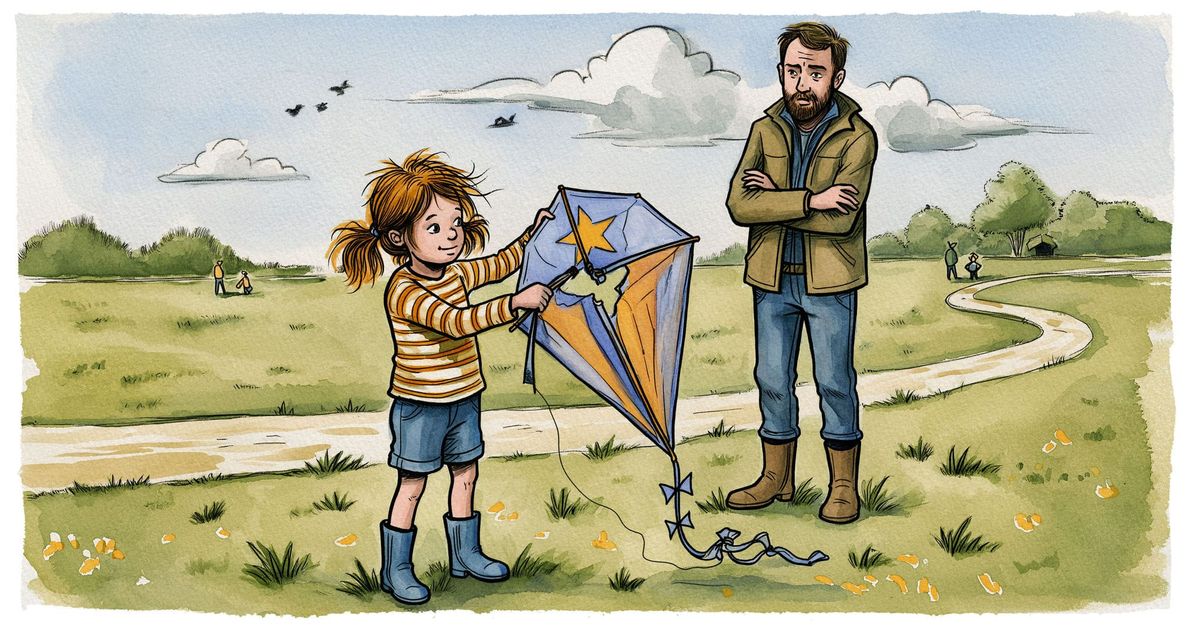
You have explained that the kite is broken. The spar has snapped. The adult has already decided the afternoon is over. Your child is still turning the kite over, looking at the knot and testing the frame. From across the yard, that can look like not listening. But accepting the fact and accepting the conclusion are two different things.
A Rule Can End the Problem or Describe It
Some children hear “It cannot be done” as the end of the conversation. Other children hear a piece of information. The spar is broken. The usual way will not work. What else is available? The second child is not necessarily denying the rule. They may be using it.
That distinction matters for children who hear “NO” all day. Every no can begin to teach the same lesson: the rule ends the problem. The skill of solving begins when the rule becomes part of the problem instead.
The Fairy King Has a Rule

In The Kind Boy Teams Up with the Fairy King, the Kind Boy spends seven years learning to be a healer. When he cures the Fairy King, he refuses gold and asks for one thing: to improve his skill as a doctor. The Fairy King gives him a magical insight into the future. If the Fairy King appears at a sick person’s feet, the Kind Boy can cure them. If he appears at the person’s head, they will die and there is nothing more to do.
Later, the Kind Boy is called to the bedside of a dying princess. The Fairy King is standing at her head. The Kind Boy does not decide the rule is wrong. Motivated by love, he picks up the princess and turns her around. Now her feet are where her head had been. He uses the rule to trick death into going away.
Head or Heart
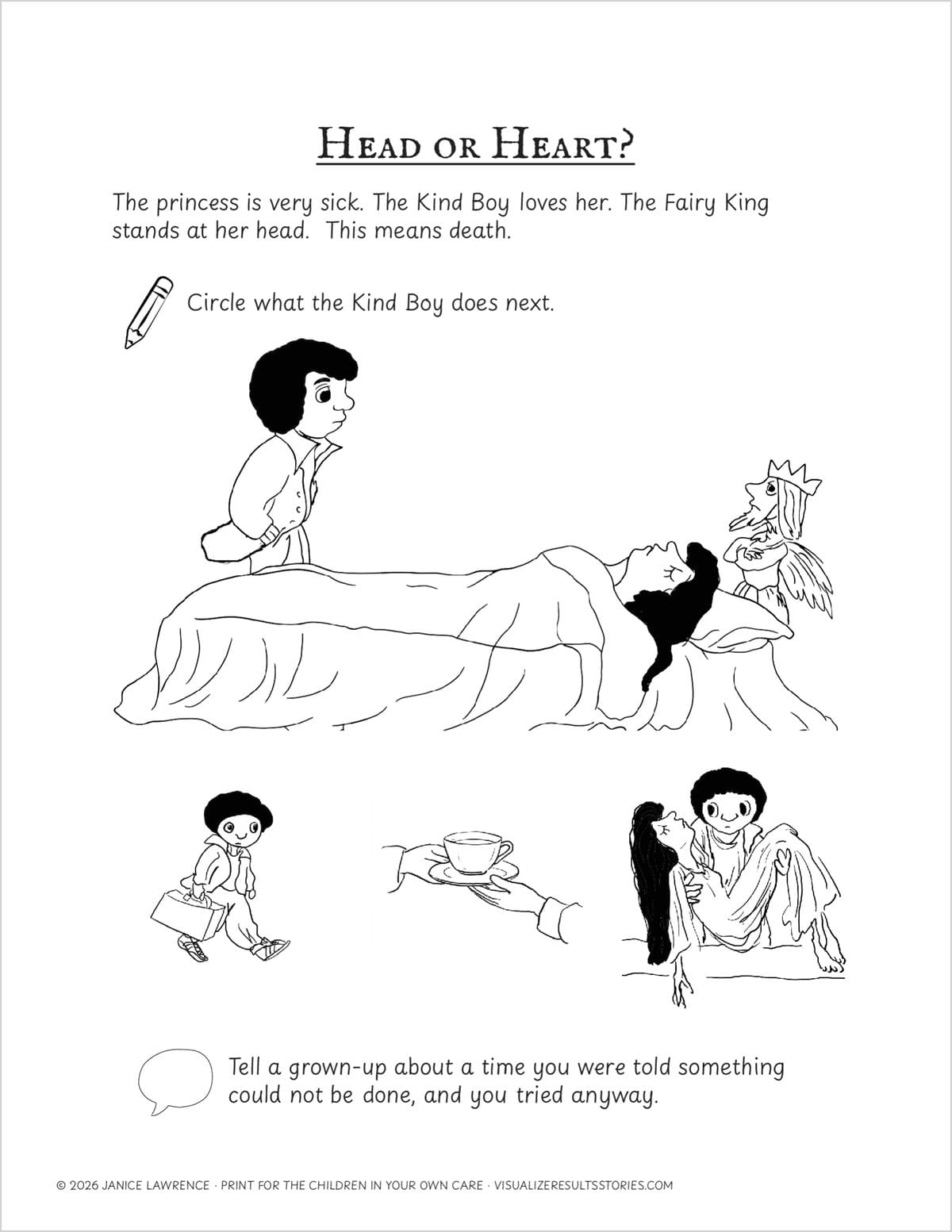
The free activity shows the princess in bed, the Fairy King at her head and the Kind Boy at her feet. Below the picture are three possible next moves: walk away, offer medicine, or lift the princess. The cup of medicine matters. It looks helpful. It is also hope without a plan, because the rule has already said that medicine will not save her. Ask your child to circle what the Kind Boy does next. Then ask, “What is he doing?”
If your child chooses the cup, do not stop at wrong. Ask how the medicine could change the Fairy King’s position. If they choose to lift the princess, ask what will be different after he moves her.
Does This Sound Like Your Child
This activity may help a child who:
- Keeps working after an adult says the problem is finished. They may have accepted the fact and rejected only the conclusion.
- Treats a rule as information. The Kind Boy succeeds by using the Fairy King's rule instead of pretending it does not exist.
- Chooses the helpful-looking answer first. The cup of medicine creates a reason to ask how an action would actually change the problem.
- Thinks more clearly when something can be moved or turned. The bed makes an abstract rule visible in physical space.
- Resists correction but can explain a plan. Asking what will be different after the choice keeps the conversation inside the child's reasoning.