Can a Child Understand a Story They Cannot Retell?
Yes. A pencil can show you what words cannot.
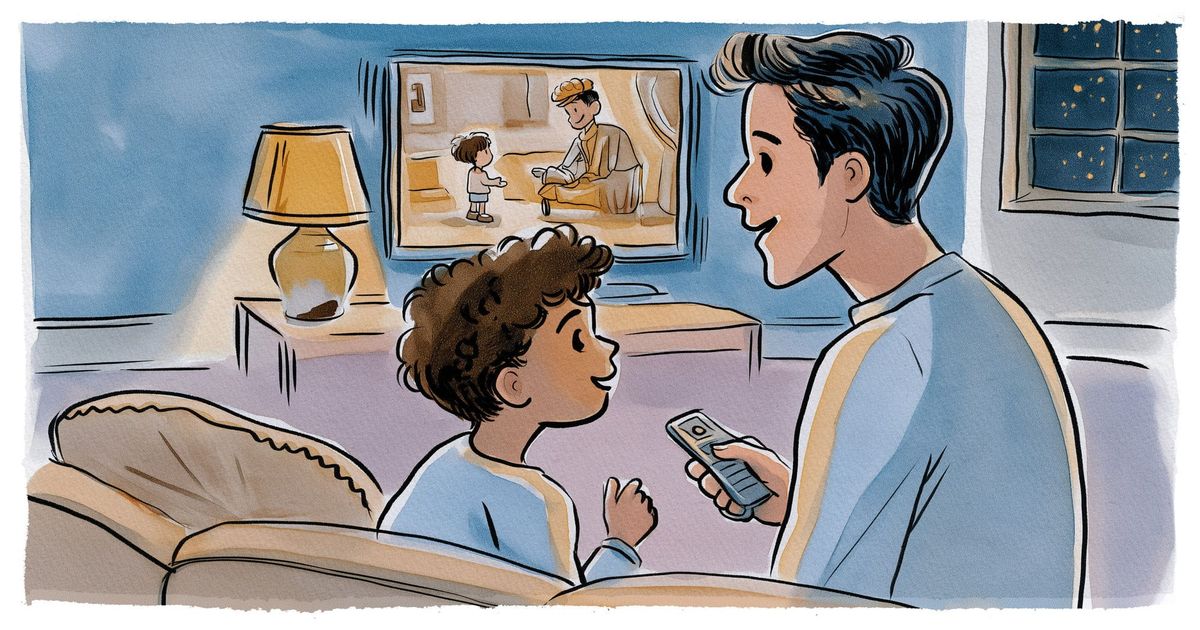
Your child watches the whole story, loves it, and asks for it again. Then you ask what happened, and you get three words and a shrug.
That can look like a child who missed the story. But understanding a story and retelling it are two different jobs. This week the second job is not required. The free activity at the end lets your child show you the plot with a pencil instead.
This Week's Story
The Kind Boy Saves the Dragon is the first of four stories about a young king who believes in the power of kindness.
He gives his money to the poor, and his advisors throw him out of his kingdom. On the road he stops to pull a splinter from a dragon's foot. Years later, a greedy king orders him to fight a dragon. It is the same dragon. The kindness that cost him time at the beginning of the story saves him at the end.
That is cause and effect. One early choice changes what becomes possible later.
Four Things to Talk About
Watch the video together once, all the way through, without stopping. The first viewing is for the story. Then replay one moment and choose one or two questions. The goal is a conversation, not a test.
“Why did the two men want him to go away?”
The first picture shows them talking with their heads together while the Kind Boy sits on his throne by himself. The picture gives your child evidence. The rest has to be worked out.
“What would you have done when you saw the dragon?”
Walking past and running away are allowed. It is a big dragon.
“The king said he could go free if he killed the dragon. Why didn't he do it?”
This is where the whole story turns. Your child has to remember who the dragon is and what the Kind Boy believes.
“Who helped him in the end?”
If the conversation is still going, ask, “Why did the dragon help him?” Now the beginning and ending of the story have to connect.
Today's Free Activity: The Way Home
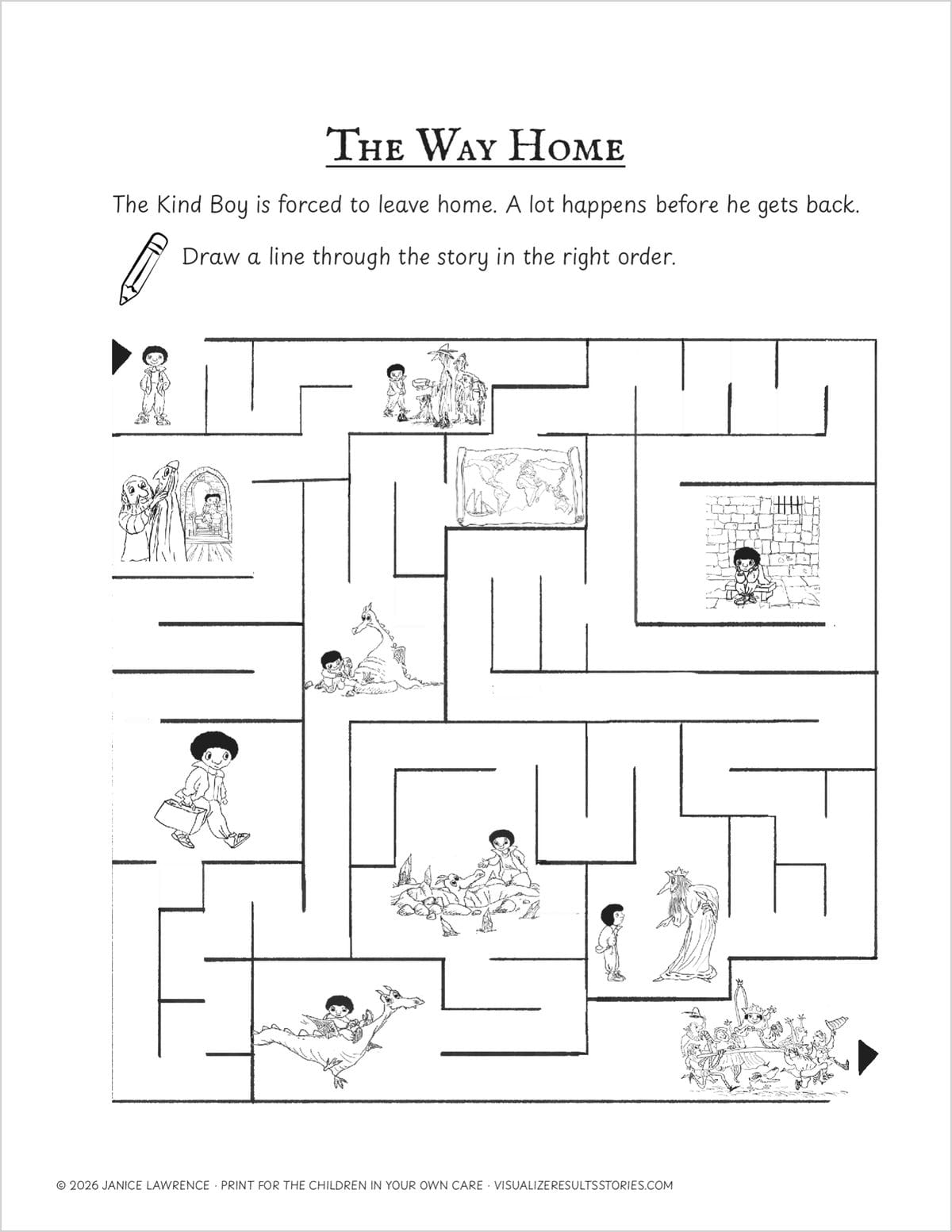
The maze looks like a reward, and it is one. It is also a way to show story comprehension without retelling the story aloud.
Eleven scenes sit along the paths. The only route to the end passes through them in story order. A wrong turn does not get marked wrong. It simply stops. Your child can look at the next picture and notice that the dragon cannot be flying yet because the splinter is still in its foot.
The pictures hold the events on the page. Your child only has to consider one junction at a time. The route becomes the answer.
Does This Sound Like Your Child
This activity may help a child who:
- Understands more than they can retell. Nothing on the page requires a spoken summary.
- Remembers pictures more easily than sentences. Each scene stays visible while the story order is worked out.
- Loses track of several events at once. The maze holds the sequence, one junction at a time.
- Worries about giving the wrong answer. A false path stops. It does not announce failure.
Try It This Week

- Watch once without stopping. The first time through is for enjoying the story.
- Find the first and last pictures together. Then let your child choose the route.
- Let them check the storybook. Looking it up is not cheating. It is what the book is for.