What Did Your Child Mean to Say?
The first sentence may not be the whole answer.
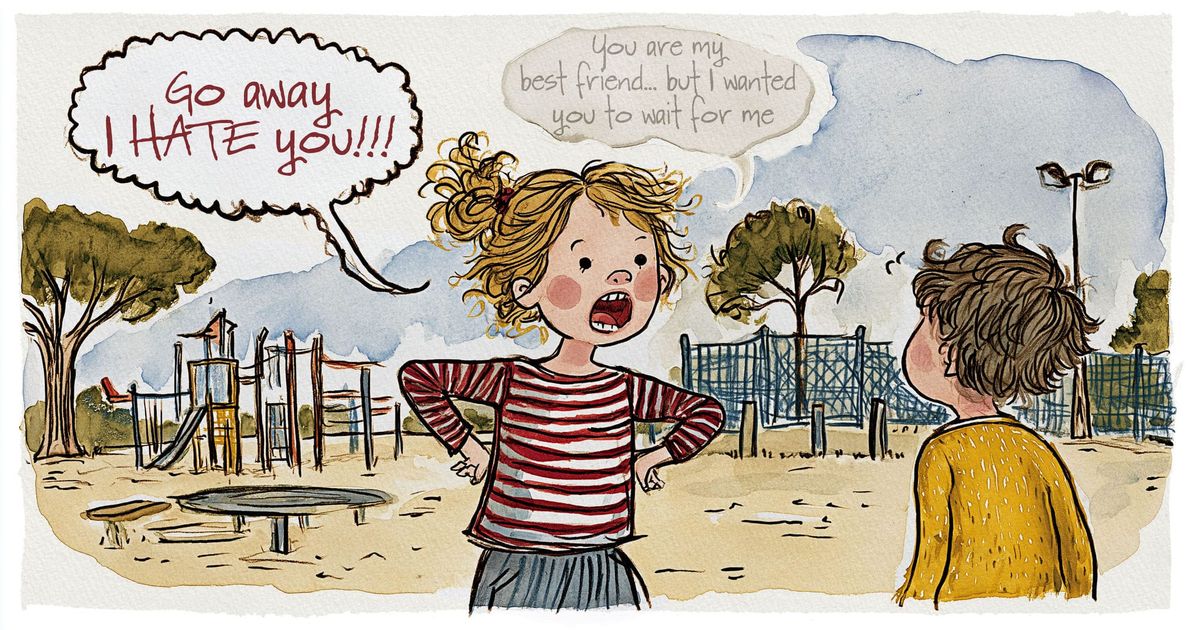
A child shouts, “Go away. I hate you!” That is the part everyone can hear. What we cannot hear may be something completely different: “You are my best friend.” “I wanted a turn.” “I thought you were going to wait for me.” “I am really hungry, and right now everything feels terrible.”
The sentence still matters. So does the child who heard it. But if we stop with the words that came out, we may miss the problem the child was trying to solve.
The Better Sentence May Arrive Second
“Think before you speak” is sensible advice. I have needed it myself more than once. But it does not tell a child what to think about.
A child may know that the first sentence went wrong. They may see the other child walk away. They may even be sorry. What they still may not know is how to get from the feeling to the sentence they needed.
Start with one question: “What did you want?” Not “Why did you say that?” Not yet. “Why?” can ask a child to explain anger, hunger, disappointment, friendship, and a sentence they already wish they had not said. “What did you want?” gives them somewhere smaller to begin: a turn, the toy back, more time, for the other child to stop laughing, or for somebody to notice that something was wrong.
Once the want is visible, the two of you can work on the words.
The Giant Says Exactly What He Does Not Want

In The Kind Boy Teaches the Giant a Lesson, the giant receives three wishes. He could wish for almost anything. Instead, he loses all three wishes during two bad moments. First, his horse will not stand still. The giant is angry and shouts that he wishes the horse’s neck were broken. The wish comes true. Now the giant has no horse and has to carry the saddle home himself. He becomes hot and tired. When he thinks about his wife sitting comfortably at home, he wishes she were sitting on the saddle instead. That wish comes true too. His wife is now stuck to the saddle, and the third wish has to be used to get her off.
The giant did not want a dead horse. He did not want his wife stuck to a saddle. He wanted the horse to stand still. Later, he wanted someone to understand that he was tired and angry. His words described his feeling. They did not solve his problem.
That is an important difference.
Try Saying It Better
The free Say It Better activity lets your child practice that difference while the problem belongs to somebody else.
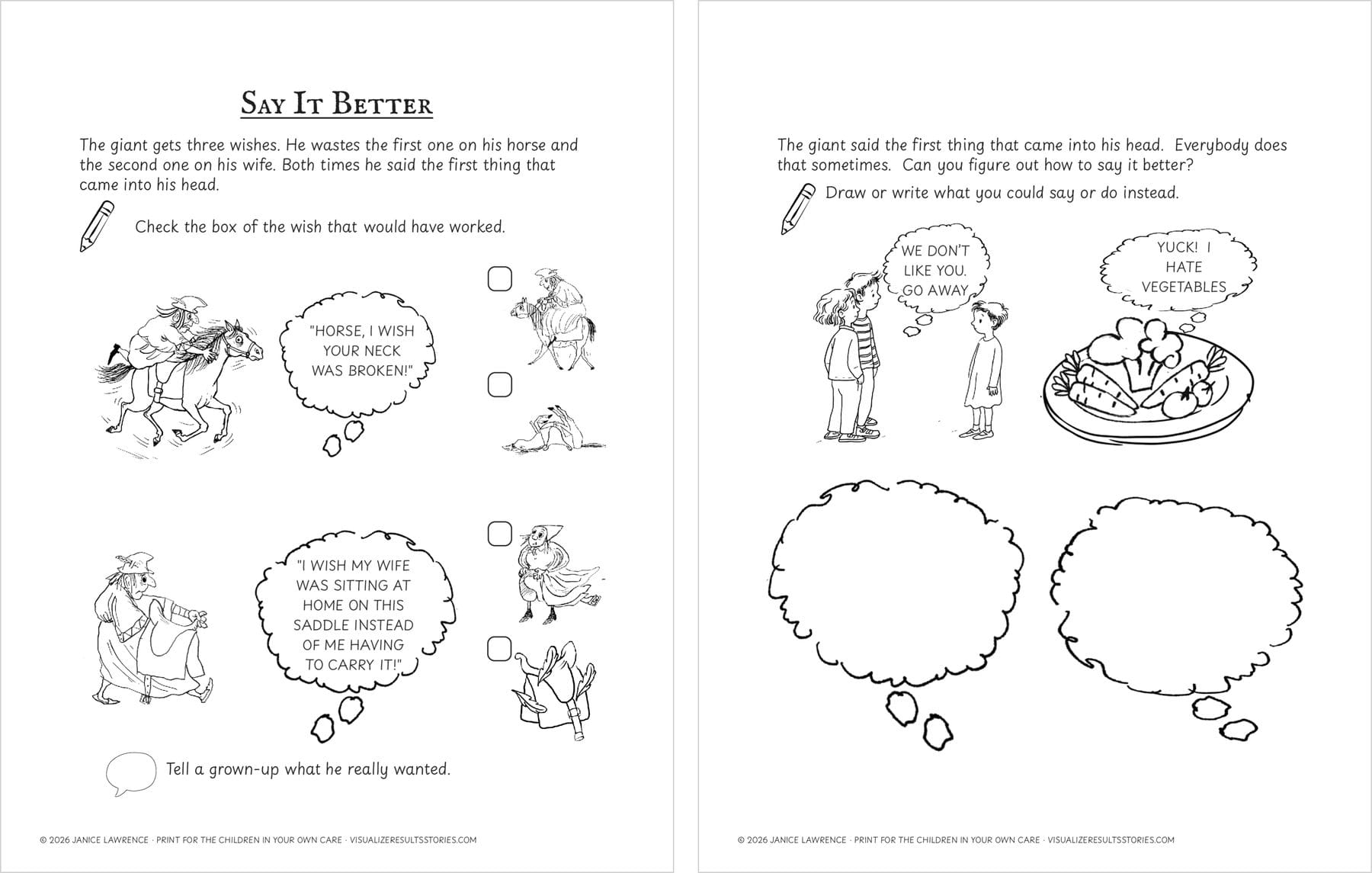
On the first page, your child looks at the giant’s two wishes and chooses the outcome he really wanted. Then you can ask, “What did the giant really want?” Your child does not have to invent an answer from nothing. The choices are already on the page. They can look, compare, point, and explain as much or as little as they want.
The second page moves into situations a child may recognize: a plate of vegetables and a child being left out. “Yuck! I hate vegetables.” “We don’t like you. Go away.” Under each picture is an empty speech bubble. Your child can write, draw, or tell you what the person could say or do instead.
The vegetables are easier. That is useful. A child can practice finding a second sentence before the picture becomes more personal. When you reach the playground, do not hurry to fill the bubble. Ask: “What do you think this child wanted?” “What could they say?” “What else could they do?” More than one answer can work.
What Your Child Is Practicing
This activity uses the Learning Action Solving. Solving does not always mean finding the correct answer to a puzzle. Sometimes it means noticing that the first attempt did not work and trying another one.
Your child is connecting three things: what the person wants, what the person says, and what may happen next. A child can do that thinking without writing a complete sentence. They can point to one of the giant’s choices. They can draw in the empty bubble. They can act out the second try. You can write down the words they dictate.
The thinking counts.
Does This Sound Like Your Child
This activity may help a child who:
- Says something harsher than they meant. The activity separates the first sentence from the message the child was trying to send.
- Knows the words went wrong but cannot explain why. “What did you want?” gives them a smaller place to begin.
- Needs choices before making a sentence of their own. The giant's alternatives make a second attempt visible.
- Communicates more easily by drawing, acting or dictating. A complete written sentence is not required for the thinking to count.
- Gets stuck on the mistake. Trying another sentence gives the child something useful to do after the first one fails.
Try It This Week

Do the first page together when nobody is upset. Let the giant make the mistakes.
Later, if a sentence comes out wrong, wait until your child is ready and ask, “What did you want?” Listen to that answer before asking for an apology or a better sentence. The apology may still matter. Repair may still be needed. But now the child has something more useful than “Do not say that again.”
They have another sentence to try.