What Does Your Child Hear When You Talk About Them in Front of Them?
Stories give children a way to show you what is really going on.

When my autistic son was young, he would run naked into a snowstorm and put on a ski jacket at the beach. Hot felt cold to him and cold felt hot. We saw what he did, but we didn’t understand why he was doing it.
It was such strange behavior, that adults often discussed those differences while he was sitting in the room. He did not speak in the way we expected, so people forgot that he was listening. He was.
A child does not have to join a conversation to hear the conclusions being made about them.
Overheard Whispers Count
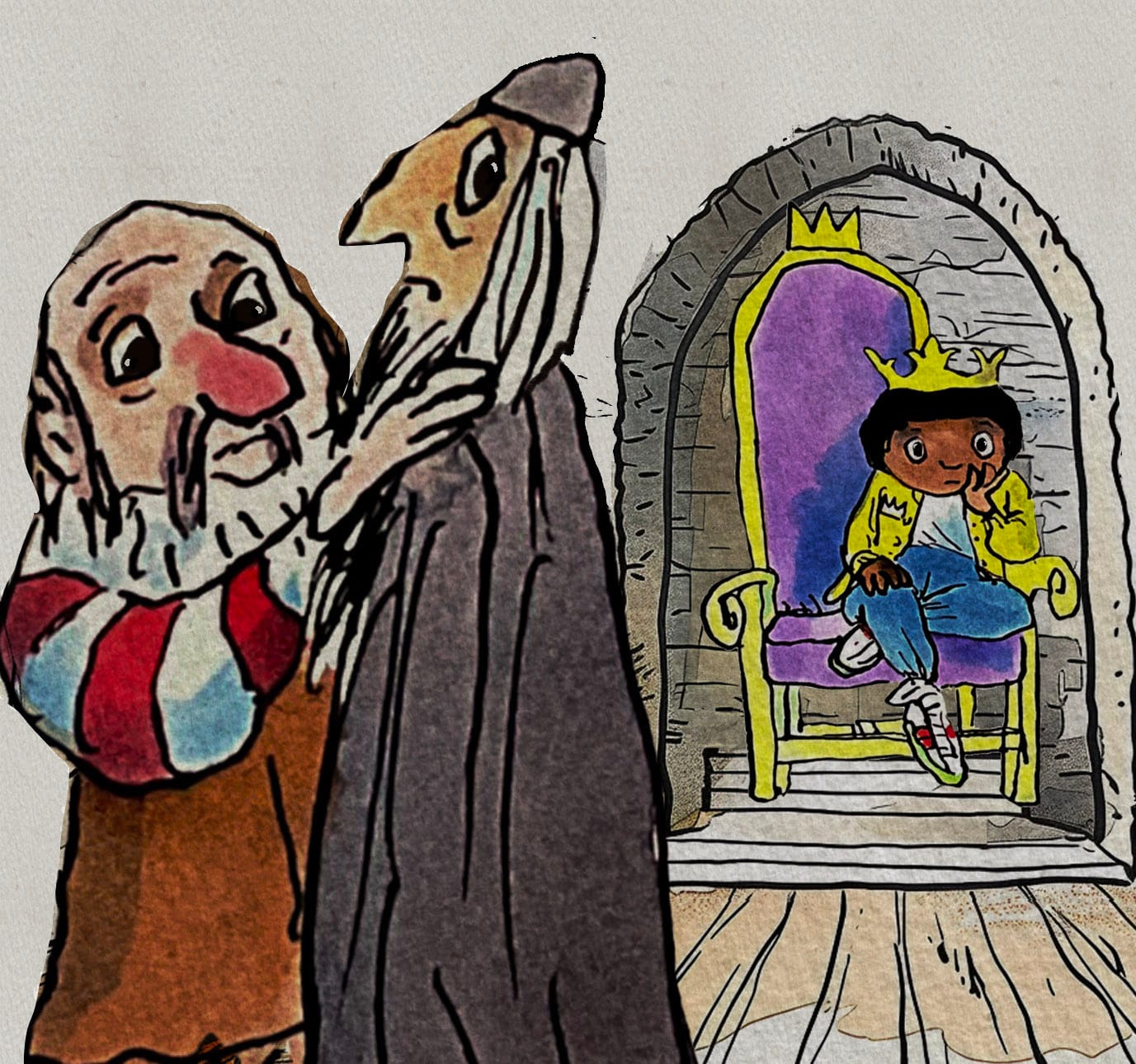
In The Kind Boy Saves the Dragon, the Kind Boy sits on his throne while his councillors whisper about him.
They are angry that he uses the kingdom's money to help the poor. They do not ask him why. They do not include him in the conversation. They decide he is a bad king and make a plan to get rid of him while he is still in the room.
An IEP meeting, a doctor's appointment, or an argument at the dinner table may look very different from a throne room. But a child can still hear adults discuss their slow reading, difficult behavior, test scores, or future as if the child were not one of the people in the conversation.
Pictures Give Us Context
A child who cannot read a page of print may still read a room. Who is angry? Who is pretending not to be? Who has already decided something?
Those questions require interpretation and prediction. They are also part of reading comprehension. The skill may already be there even when the words are not.
The free activity begins with the Kind Boy's room. It gives your child time to look at the faces, gestures, and positions in the picture before anything becomes personal.
Today's Free Activity: Behind His Back
Free printable, two pages. The first page asks what the picture shows. The second offers the question to the child.
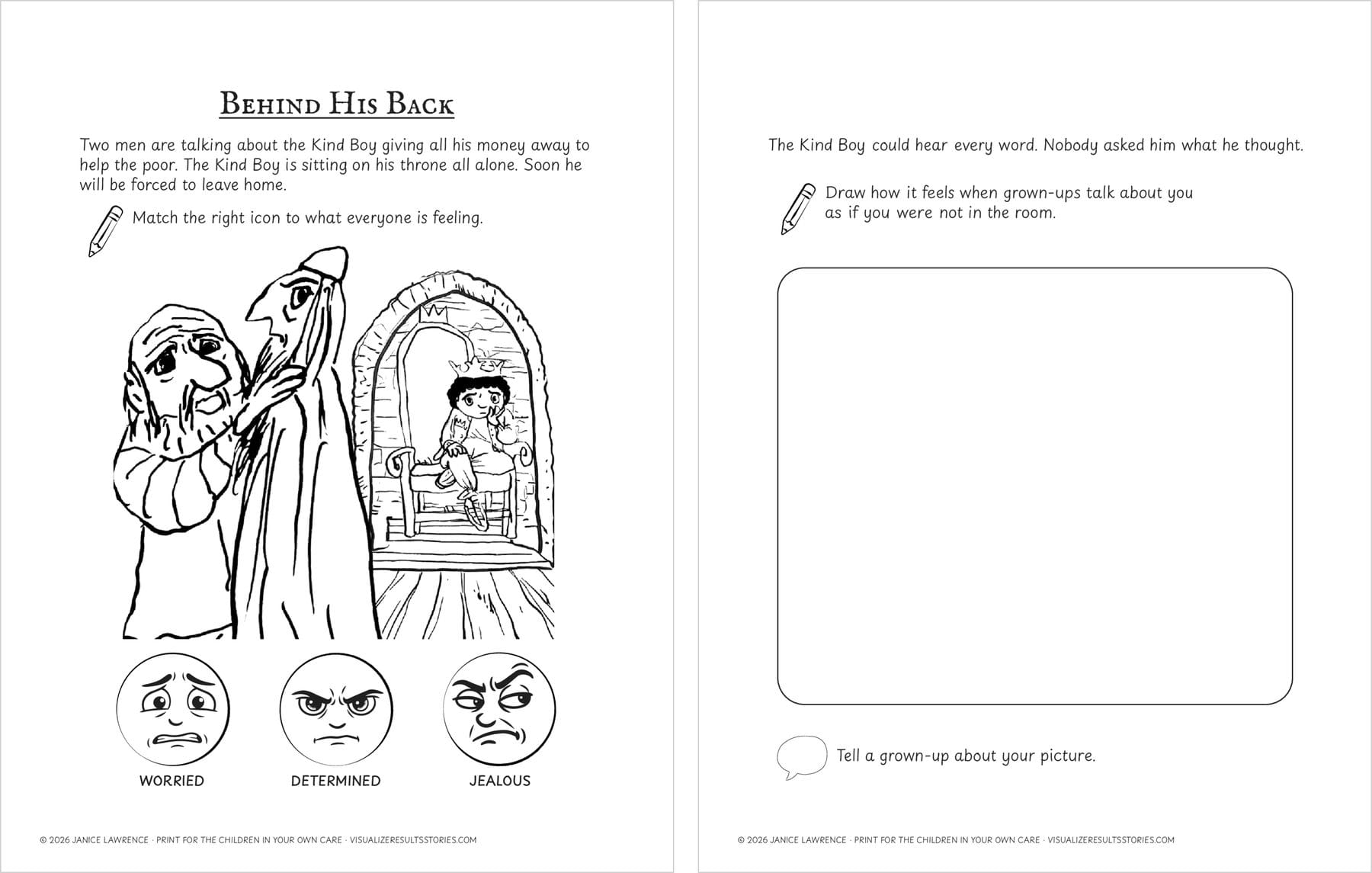
First, your child looks at the councillors and the Kind Boy. What might each person be feeling? What in the picture suggests that? There is room for more than one answer if the picture supports it.
The second page invites your child to draw about a time when adults talked about them while they were in the room. It is an invitation, not a demand. Your child can draw, talk, change the subject, or keep the page private.
If they choose to show you, ask, “What did you want the adults to know?” Then listen. Do not explain the conversation before your child has had a chance to explain the picture.
Does This Sound Like Your Child
This activity may help a child who:
- Notices tone and body language. The picture gives them time to show what they see.
- Finds spoken explanations difficult. The drawing can carry the answer.
- Has been discussed more often than consulted. The second page gives the child the first turn.
- Assumes adults have already decided. A calm conversation can separate what was said from what the child heard.
- Wants to keep the experience private. Finishing the page does not create an obligation to share it.
Try It This Week

- Finish the sentence to your child. If you catch yourself talking about them in front of them, turn and include them.
- Ask before discussing. Try, “Is it all right if I tell Grandma what happened at school?”
- Describe what happened, not what the child is. Say, “We read two chapters and talked about whales,” instead of, “He is not a good reader.”