What Does Your Child Do When There Is No Grown-Up Around to Ask?
Good judgement is a skill. It can be learned.
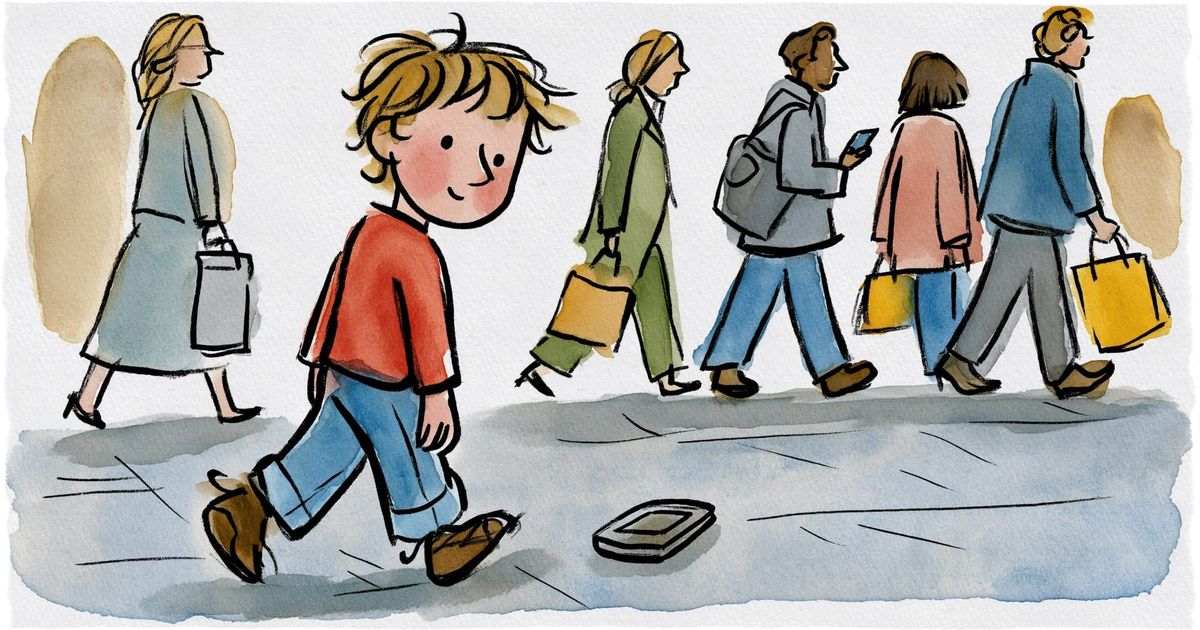
A child sees a phone lying on the pavement. Nobody else seems to have noticed it. Should they pick it up? Leave it alone? Find an adult? The hard part is not knowing that helping is good. The hard part is deciding what helping looks like in this particular moment.
As children begin doing more without us beside them, these small decisions appear everywhere. We usually see only the outcome. The thinking that produced it remains invisible.
The Skill Is Called Solving
Solving means using what you know to figure out what to do next. It is the skill a child needs when a new situation does not come with instructions and there is nobody standing beside them with the answer.
The process has four parts: work out what is happening, decide how serious it is, consider what you can do safely, and choose what to do next.
Sometimes that happens in a second. Sometimes a child freezes, rushes in, or walks past. From the outside, we see the action. We do not see which part of the decision was hard.
Why It Is Hard to Teach
We say, “Be kind.” “Be helpful.” “Look after each other.” All of that is true. None of it tells a child whether to pick up the phone, leave it where it is, or ask someone for help.
“Always help” does not work either. Some situations are not safe to walk into. A child needs at least two useful choices: I can help, or I can get a grown-up who can.
Finding an adult is not failing to help. It is one way of helping. A child who knows that has something they can do even when the problem is too big to handle alone.
The Moment the Picture Hides
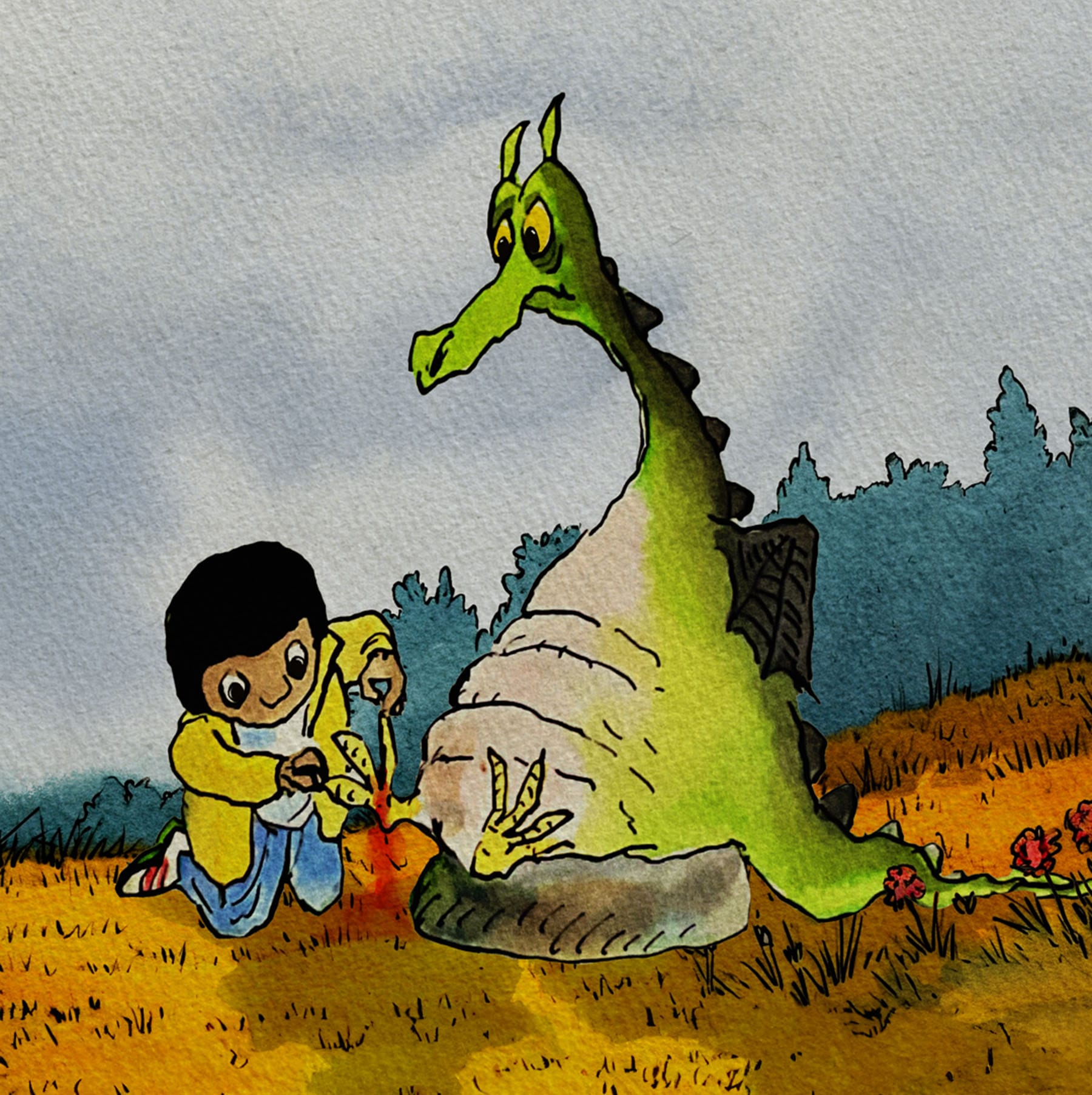
The Kind Boy is a young king who gives his money to the poor. His advisors think a king should be the richest man in town, so they run him out of his own kingdom.
On the road, he hears a dragon bellowing in pain. The dragon is enormous. He is small. Nobody else is there. What should he do?
The Kind Boy stops. Nobody tells him to. He looks at what is happening and does what he thinks is right.
The story gives us a useful question to ask with a child: When can you stop and help, and when should you go for help?
Today's Free Activity: Stop or Walk Past?
Free printable, two pages. The first page points at the decision. The second hands it over.
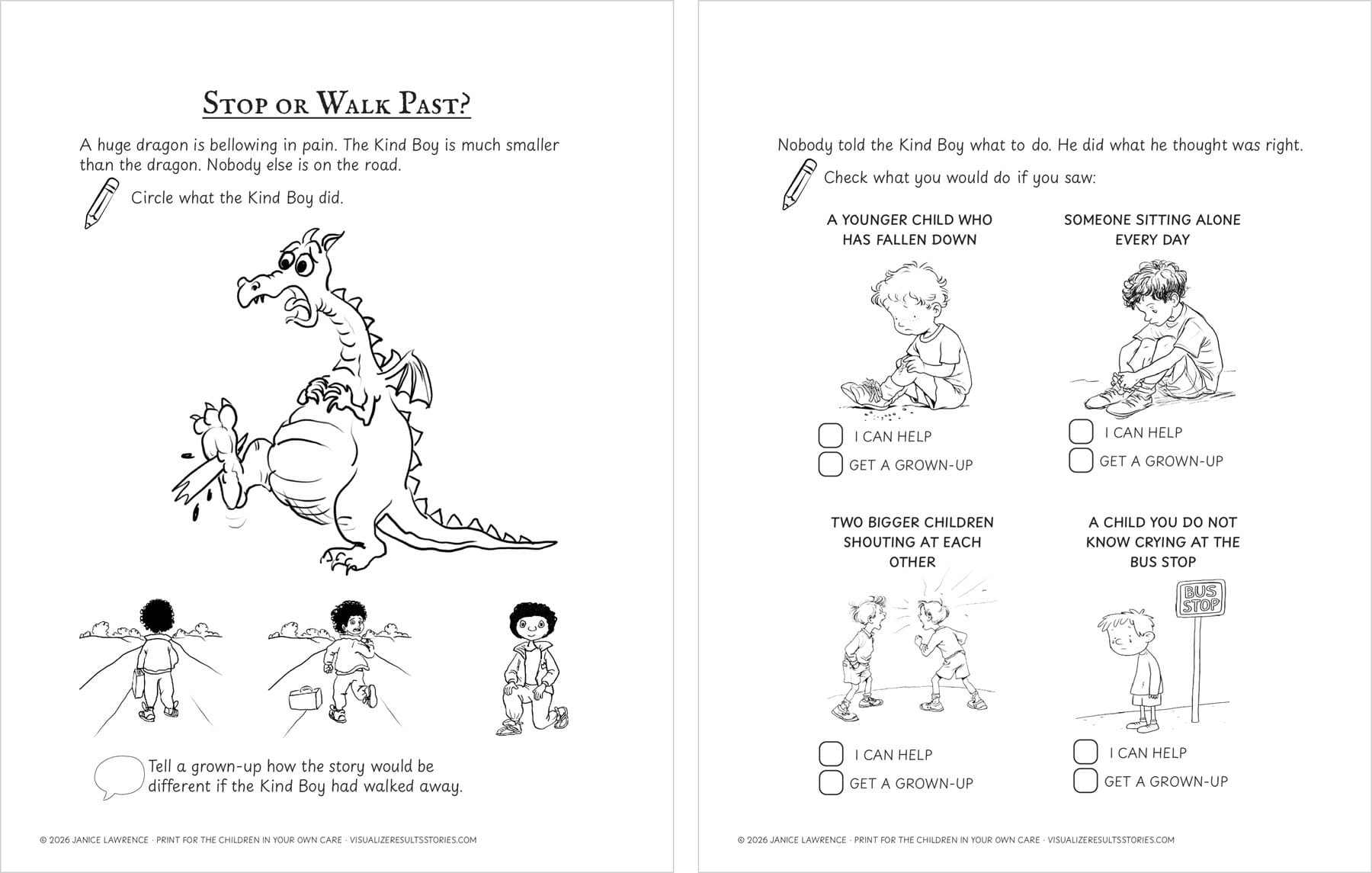
First, your child looks at the Kind Boy's choice. Then they consider what would happen if he made a different one. The decision changes what happens next. That is cause and effect, made visible inside the story.
The second page moves into everyday life. Four situations ask your child to choose between I CAN HELP and GET A GROWN-UP. The point is not to memorize four correct answers. It is to notice what is happening, consider safety, and explain a choice.
The most useful part may come after the box is checked. Ask, “What made you choose that one?”
Does This Sound Like Your Child
This activity may help a child who:
- Acts before stopping to look. Two printed choices create a small pause between noticing and acting.
- Freezes when somebody needs help. Getting a grown-up becomes a real action, not a failure to act.
- Follows rules literally. The page shows why “always help” changes when the situation is unsafe.
- Doubts their own judgement. The Kind Boy is small and the dragon is enormous. He still looks, thinks, and chooses.
Try It This Week

- Use a small real moment. When you notice somebody drop a glove or struggle with a door, ask, “What do you see happening?” Then ask, “Can we help, or should we get someone?”
- Practice when nothing is wrong. A decision rehearsed while nothing is at stake is easier to find when something is.
- Ask about the reason. When your child chooses, ask what made that choice feel right.