How Does a Child Work Out Who Someone Really Is?
Learning to look beyond appearances is an important part of learning to read.

Your child comes home from the first day of school and announces that the new teacher is mean. She never smiles, and she has a loud voice. Two weeks later, the same teacher is wonderful.
What changed? Probably not the teacher’s face. Your child has had two weeks to watch what she does. Perhaps she helped someone who was having trouble or was kind when a child made a mistake. Your child has learned something about the teacher that wasn’t obvious on the first day.
That’s interpreting. And it’s one of the thinking skills children use to understand stories long before they can read the words.
Learning to Look Beyond Appearances
Children are pretty good at noticing things. They can spot a tiny insect in the grass, remember exactly where you hid the cookies, and notice when someone is upset even though that person says they’re fine.
But noticing something and understanding what it means are two different jobs.
A child may recognize that someone is crying without understanding why. They may see a character smiling and assume the character is friendly, even when the story gives us reasons to suspect otherwise.
Interpreting means taking what we notice, combining it with what we already know, and working out what it might mean. Sometimes we get it right. Sometimes we need more information.
That’s why interpreting matters for reading. Understanding a story involves more than recognizing words and remembering what happened. Readers have to figure out why characters behave as they do, what they might be feeling, and how their actions change the story.
A picture book gives children a wonderful place to practice. They can examine a character’s face, look at what is happening around them, and compare what the character says with what they actually do. Because the pictures remain on the page, children can return to them whenever they need another clue.
And because it’s a story, they can explore those possibilities without having to make judgments about someone they know.
What the Brave Girl Notices About the Dragon
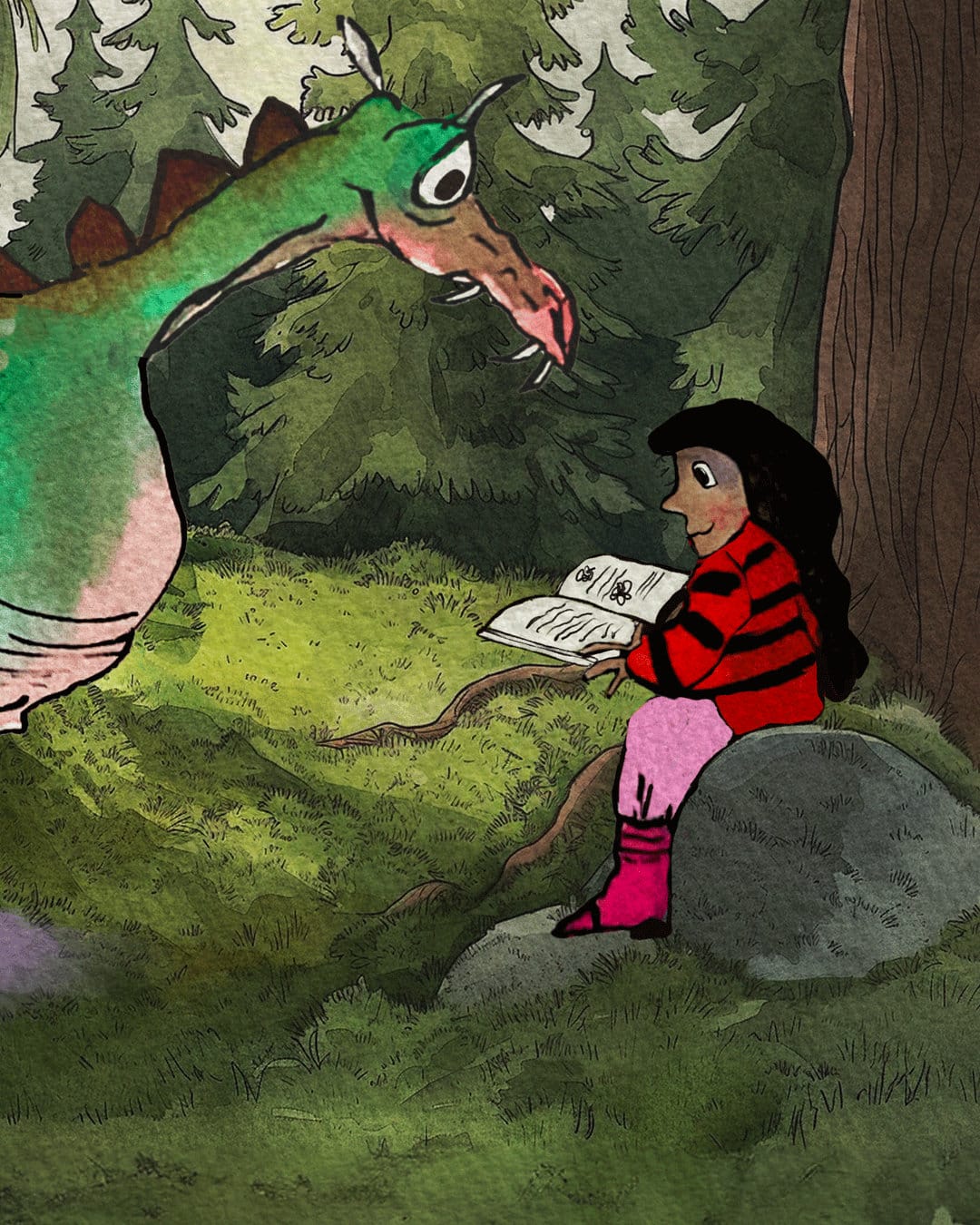
In The Brave Girl Saves the Dragon, the dragon is exactly the sort of creature we’re supposed to be afraid of. He has enormous teeth and claws, and he keeps the Brave Girl prisoner in his cave. But as the story continues, something changes. The Brave Girl plants a garden and reads stories to him. He becomes less mean, and she begins to enjoy his company.
The interesting question isn’t simply whether the dragon is good or bad. It’s how the Brave Girl comes to understand him differently. She has more information than she did at the beginning. She has watched how he responds to her, seen him behave in ways she didn’t expect, and discovered something about him that his frightening appearance didn’t reveal. That is what we want children to learn to do when they read. Instead of accepting their first impression of a character, they can look for clues, compare what happens throughout the story, and change their interpretation when they discover something new.
And there’s another benefit. Children who learn to look beyond appearances may begin to recognize that other people have feelings, experiences, and reasons for behaving as they do that aren’t immediately obvious.
That doesn’t mean every frightening character is secretly kind. It means we need to pay attention to what people actually do.
Today’s Free Activity: Who He Really Is
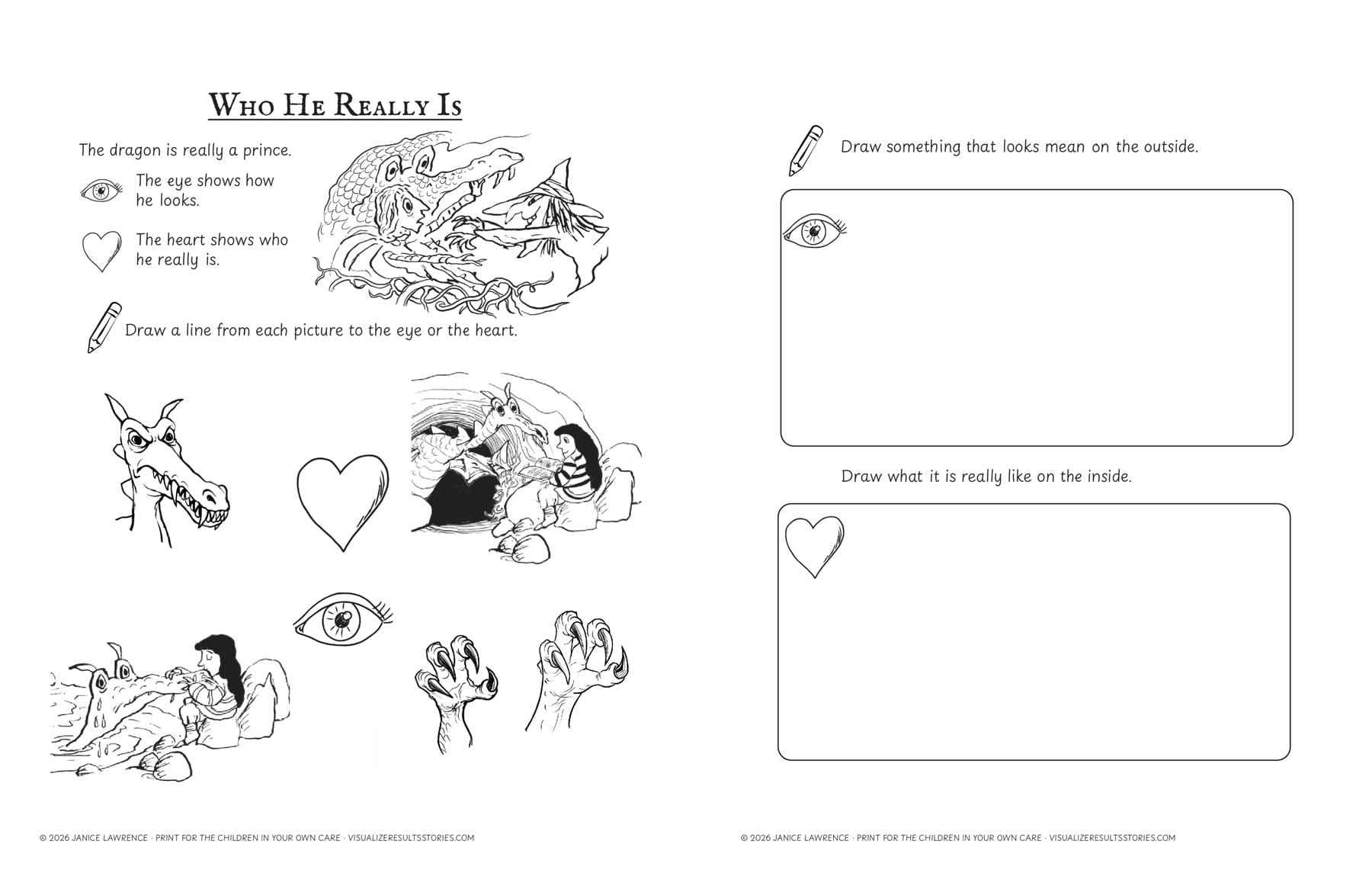
In Who He Really Is, your child looks at four pictures of the dragon and decides whether each one tells us something about how he looks or who he really is. An eye represents appearance, and a heart represents what is happening inside. Then your child draws something that looks mean on the outside and shows what it is really like on the inside. The activity helps children distinguish between what they can see and what they can infer, a skill they need when interpreting characters and understanding stories. Pay particular attention to the reasons your child gives for their choices. A surprising answer may reveal something interesting about how they are thinking.
Does This Sound Like Your Child?
This activity may be especially helpful if your child:
- Makes quick judgments about people. It encourages them to look beyond first impressions and consider what someone’s actions reveal.
- Notices feelings but has trouble explaining them. The pictures give them something concrete to examine while they work out what a character might be feeling.
- Takes things literally. The eye and heart symbols help them practice moving from what they see to what those details might mean.
- Has experienced being misunderstood. The drawing activity gives them a way to explore the difference between how someone appears and what they may be experiencing inside.
Try It This Week

- Ask about actions. When your child tells you someone is nice or mean, ask, “What did they do that made you think so?” You may discover that your child noticed something you missed.
- Talk about changing your mind. Tell your child about someone you misjudged. What happened that made you see the person differently?
- Look for clues in stories. Ask what your child thinks about a character when they first appear. Then ask again at the end. If their opinion changes, find out why.