What If the Reason Matters More Than the Right Answer?
A child's reasons show you how they think.
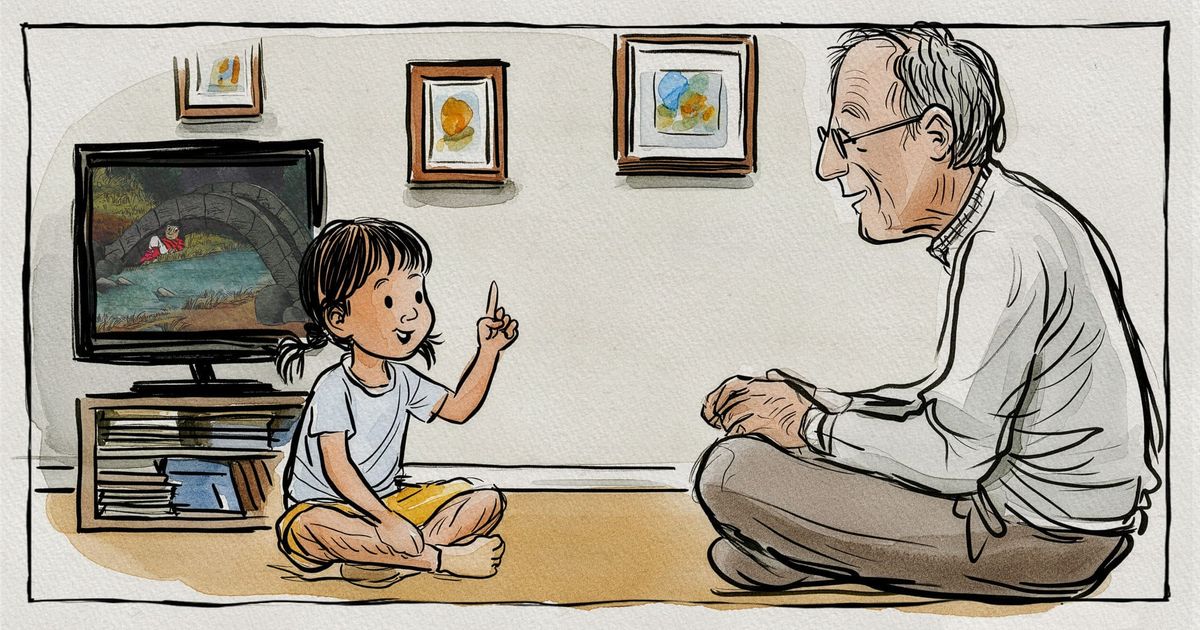
You’re reading a story with your child and ask, “What do you think happens next?” Your child makes a guess. You turn the page, and the answer is wrong. Or perhaps your child has heard the story so many times that they already know the ending. Either way, the answer tells you very little about how your child thinks.
But ask, “What makes you think so?” and you may discover something interesting. Your child might remember a detail you overlooked, recognize something important about a character, or connect two events that happened many pages apart.
The answer may be wrong. The thinking can still be good.
The Skill Is Called Predicting
Predicting means using what you already know to work out what might happen next. In a story, children use what they’ve learned about the characters and their actions to anticipate what they might do. A child who has watched someone be brave three times has a good reason to expect a fourth.
Making a prediction asks children to remember information, recognize patterns, and consider possibilities. When the story surprises them, they have a reason to reconsider what they thought they knew.
These skills help children understand stories rather than simply remember what happened. They also help children think ahead, consider consequences, and make decisions when they encounter problems in everyday life.
Why the Reason Matters
Most of the questions children hear about stories have right answers. What color was the horse? Who stole the sister? Who gave the girls the magic ring? Children quickly learn that the point is to get the answer right.
Prediction is different. If we praise only the prediction that matches the book, children may learn to guess rather than think. And a child who worries about being wrong may stop offering ideas altogether.
When we ask children to explain their predictions, we learn what they noticed and how they understood it. We may discover that they remembered something we forgot or reached a perfectly reasonable conclusion that the author didn’t choose.
Explaining their reasons also helps children organize their thoughts and communicate them to someone else. Instead of simply announcing an answer, they begin to explain how they reached it. That makes it easier for other people to understand their thinking, ask questions, and help them work through a problem.
Today’s Free Activity: Will She Let Go?
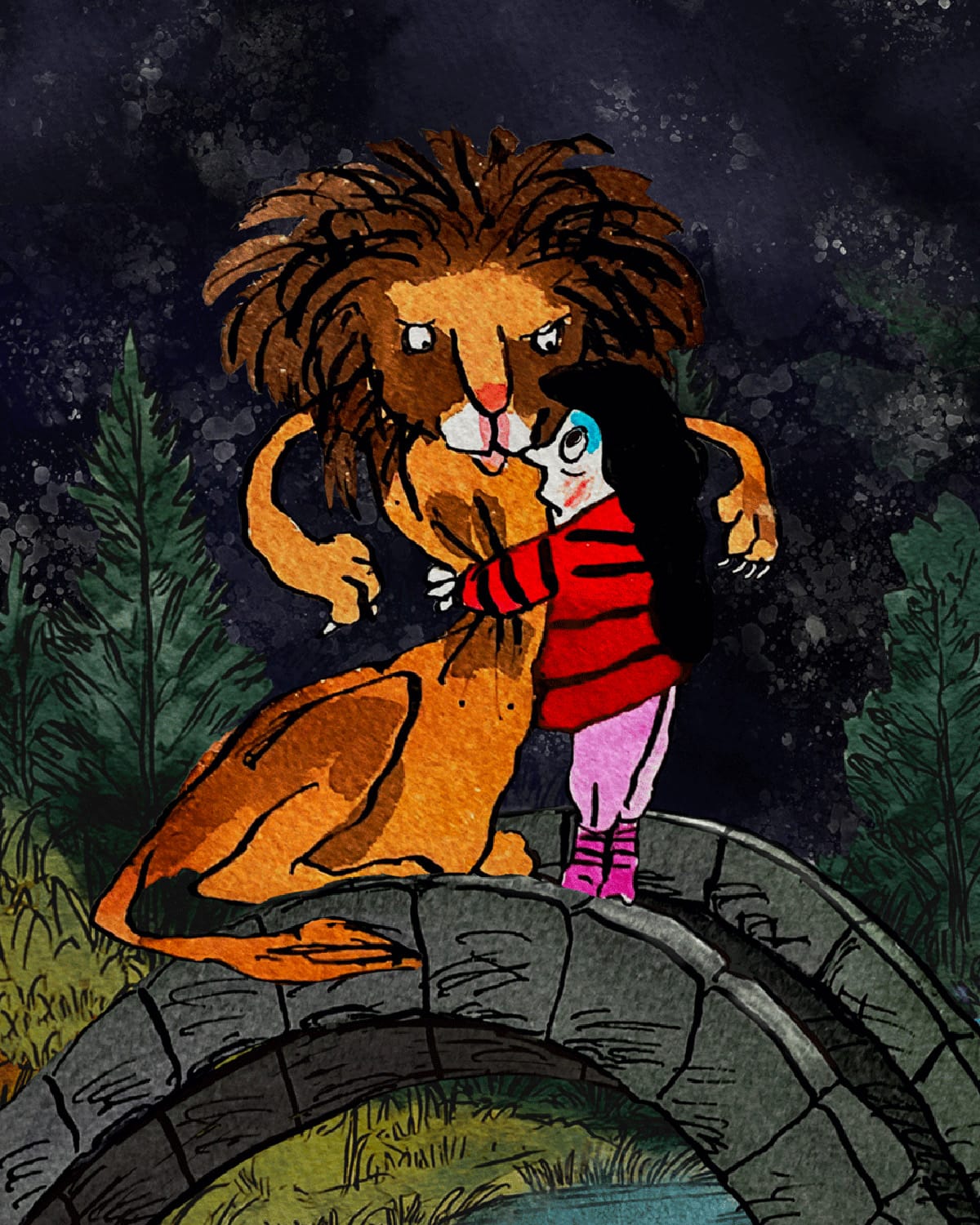
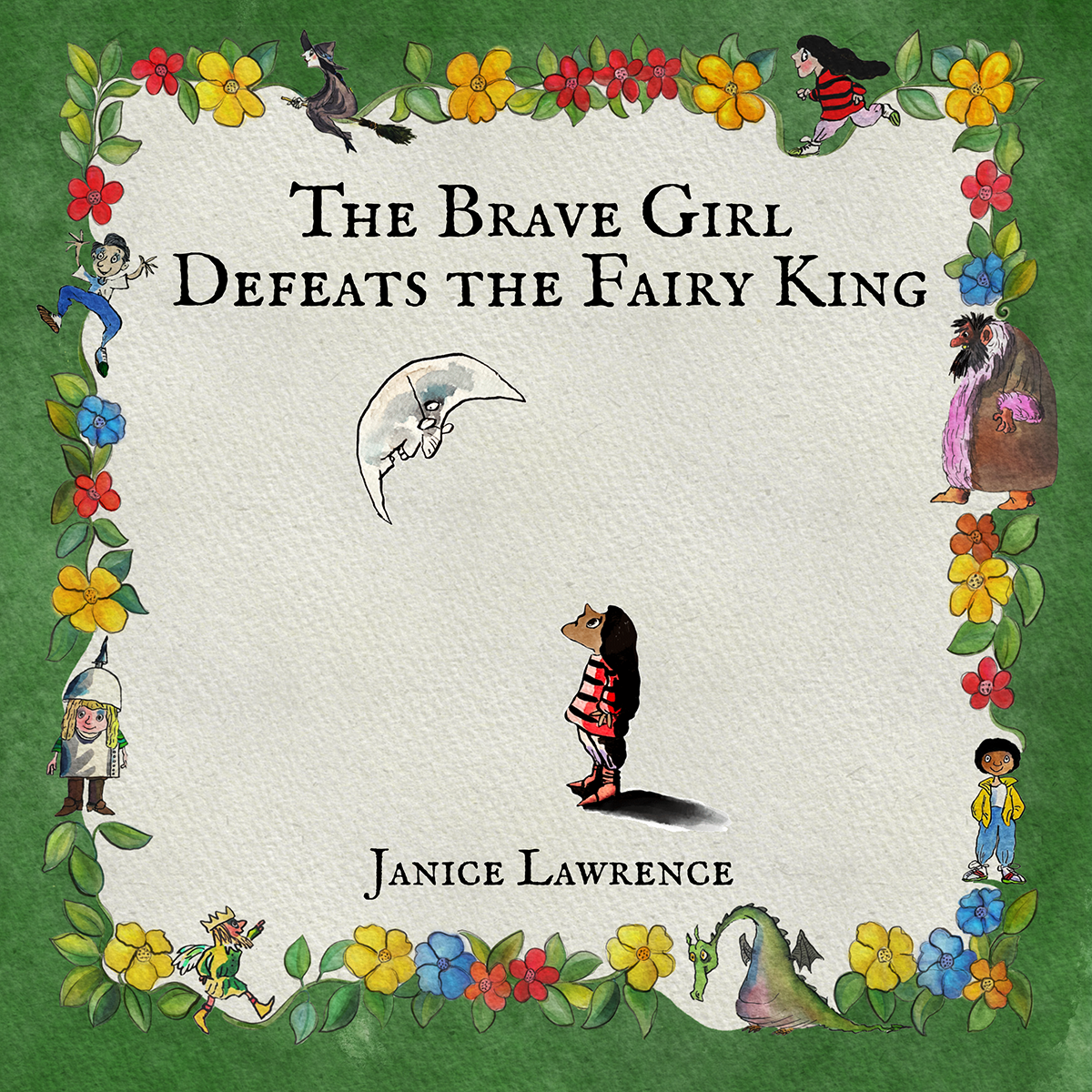
In The Brave Girl Defeats the Fairy King, the King of the Fairies steals the Brave Girl’s sister and carries her away to his kingdom at the edge of the world.
The Brave Girl searches for her through summer and winter. At last, the moon tells her how to rescue her sister. On Halloween night, she must pull her sister from the fairy horse and hold her tightly, no matter what happens.
But the fairies aren’t willing to give up their prisoner. They turn the sister into a fierce lion with enormous teeth.
Will the Brave Girl let go?
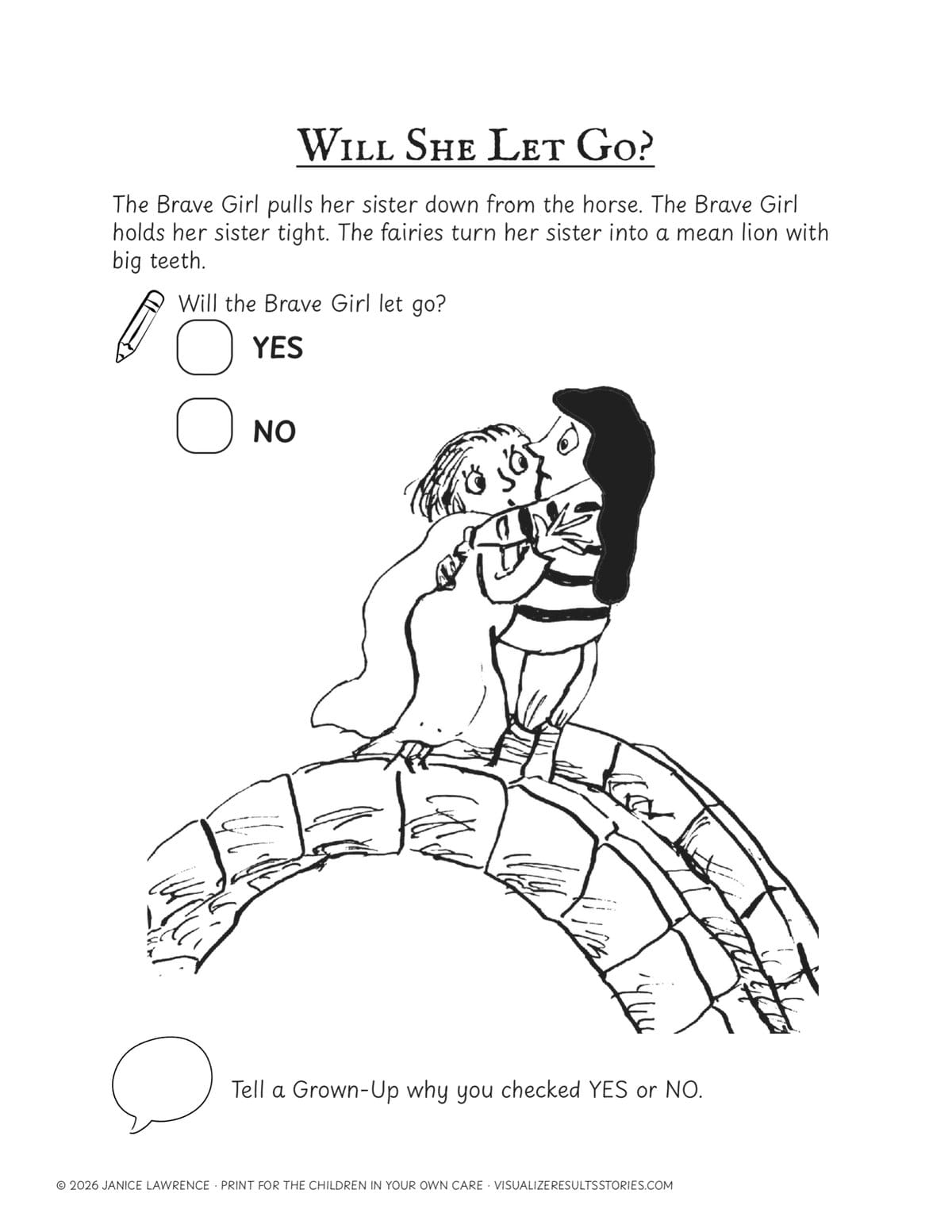
That’s the question in today’s free activity. Your child checks YES or NO, then explains why. A child who predicts NO might remember how long the Brave Girl searched or the moon’s instructions. A child who predicts YES might be thinking about how frightening it would be to hold a lion.
Both answers have reasons behind them. By explaining those reasons, children practice remembering important information, weighing evidence, and using what they know to make a decision. These skills help them understand why characters behave as they do, follow the logic of a story, and think through choices in their own lives.
Read the question aloud and let your child check a box. Then ask, “What makes you think so?” Listen to the whole explanation before responding. Notice which details your child remembers and how they use them. A spoken answer is a complete answer, and a prediction doesn’t have to be correct to be well reasoned.
If your child doesn’t know the ending, try this activity before watching the read-along.
Does This Sound Like Your Child?
This activity may be especially helpful if your child:
- Already knows how the story ends. Explaining the reason behind a character’s decision gives them something new to think about.
- Guesses quickly to finish a question. Asking why encourages them to consider what they know before moving on.
- Worries about getting the wrong answer. Either prediction can be a good answer when it comes with a reason.
- Explains better aloud than on paper. Checking a box and talking about the choice is enough.
Try It This Week
- Ask, “What makes you think so?” When your child makes a prediction, listen to the reason before offering your own ideas.
- Pause at a difficult choice. In a familiar story, stop where a character could reasonably do more than one thing. Ask what your child thinks the character will do.
- Notice the reasoning. When your child explains a prediction, tell them what you noticed about their thinking, whether or not the story agrees.