What If Your Child Needs to Learn It a Different Way?
Sometimes a different approach reaches a child when the usual one doesn't.
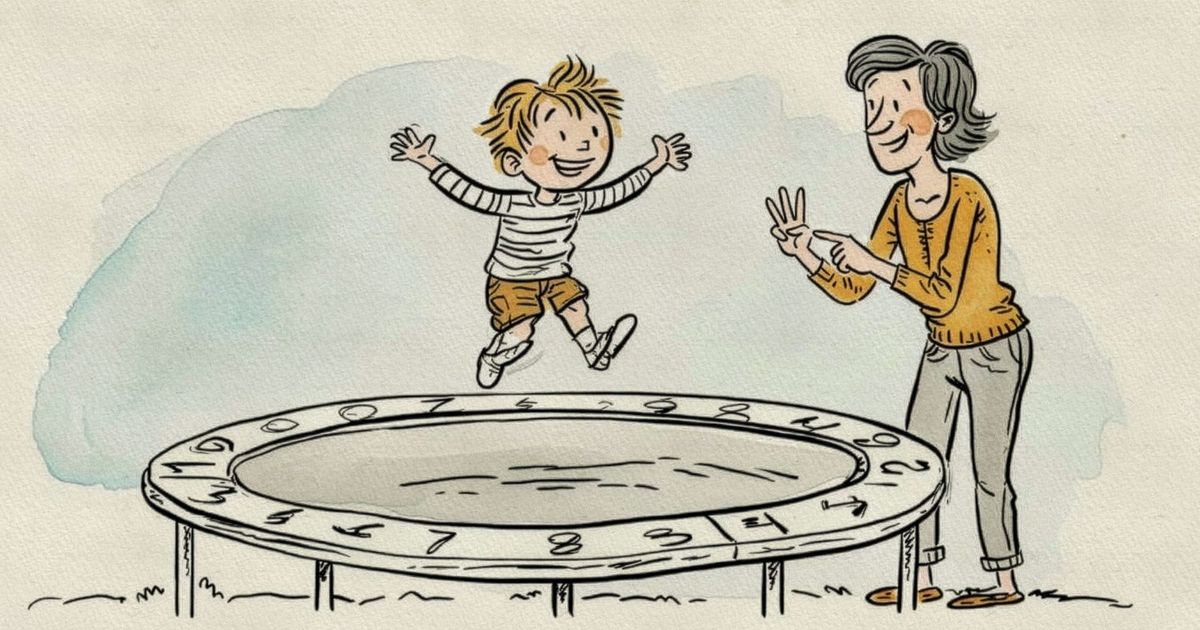
When my autistic son was four, he couldn’t count at all, which greatly concerned his preschool teacher, my parents, and everyone else who felt compelled to give me uninvited advice.
So we hired a private teacher. She was a Waldorf teacher, which meant she looked at child development from a very different perspective than most traditional educators and therapists.
One of the first things she did was teach my son to count, add, and subtract while jumping on a trampoline.
Not exactly how I learned arithmetic.
He Could Feel the Numbers
My son had trouble understanding numbers as abstract symbols. He could look at numbers on a page without understanding what they represented. But when the teacher connected those numbers to something he could do with his body, he began to understand what they meant.
Jumping gave him a way to experience addition and subtraction instead of simply looking at symbols and trying to remember what to do with them.
The teacher hadn’t made arithmetic easier by eliminating the thinking. She had found a different way for him to do the thinking.
Years later, my son went to college, where he took eleven advanced mathematics courses. He still doesn’t think about numbers the way most people do, but he has an intuitive understanding of mathematical concepts that is unusual and brilliant.
I’ve often thought about what that teacher gave him. She didn’t try to make him learn the way everyone else did. She found a way to connect something unfamiliar to something he could understand.
And she reminded me that when a child doesn’t learn something the way we expect, it may be worth changing the approach before deciding the child can’t learn it.
What Does a Different Approach Actually Do?
We tend to think of learning as something that happens when a child sits still, listens, and remembers what someone has explained. That works well for some children. For others, it leaves out an important part of how they understand the world.
A child may have trouble understanding a sequence of numbers on a page but recognize the same sequence while taking steps. Another may struggle to explain a story aloud but have no difficulty arranging pictures to show what happened. A child who cannot remember a set of instructions may remember the same information when it becomes part of a game.
In each case, the child is working with the same underlying idea. What has changed is the way they can experience and demonstrate it.
This is where Connecting becomes useful.
Connecting means finding relationships between things that may not appear related at first. A number becomes a jump. A story becomes a sequence of pictures. A difficult instruction becomes an action a child can perform.
When children can connect something new to something they already understand, they have another way to make sense of it. They can use their existing knowledge and experiences to work out what the new information means.
That supports comprehension, memory, and problem-solving. It also gives children opportunities to show what they know, even when the usual way of answering a question is difficult for them.
And perhaps most importantly, it can protect their willingness to keep trying.
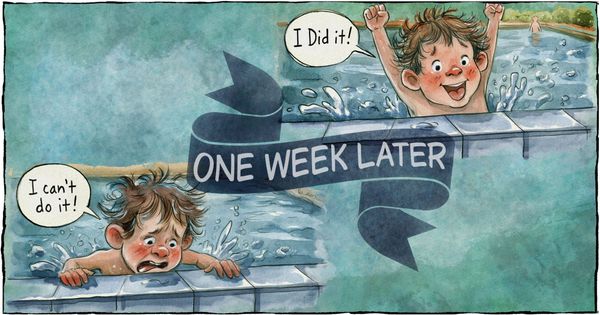
A child who repeatedly fails at the same task may begin to believe the problem is their ability. Finding another way to approach the task gives them a different experience. They discover that something they couldn’t do before may become possible when they try it another way.
Two Sisters, Two Ways
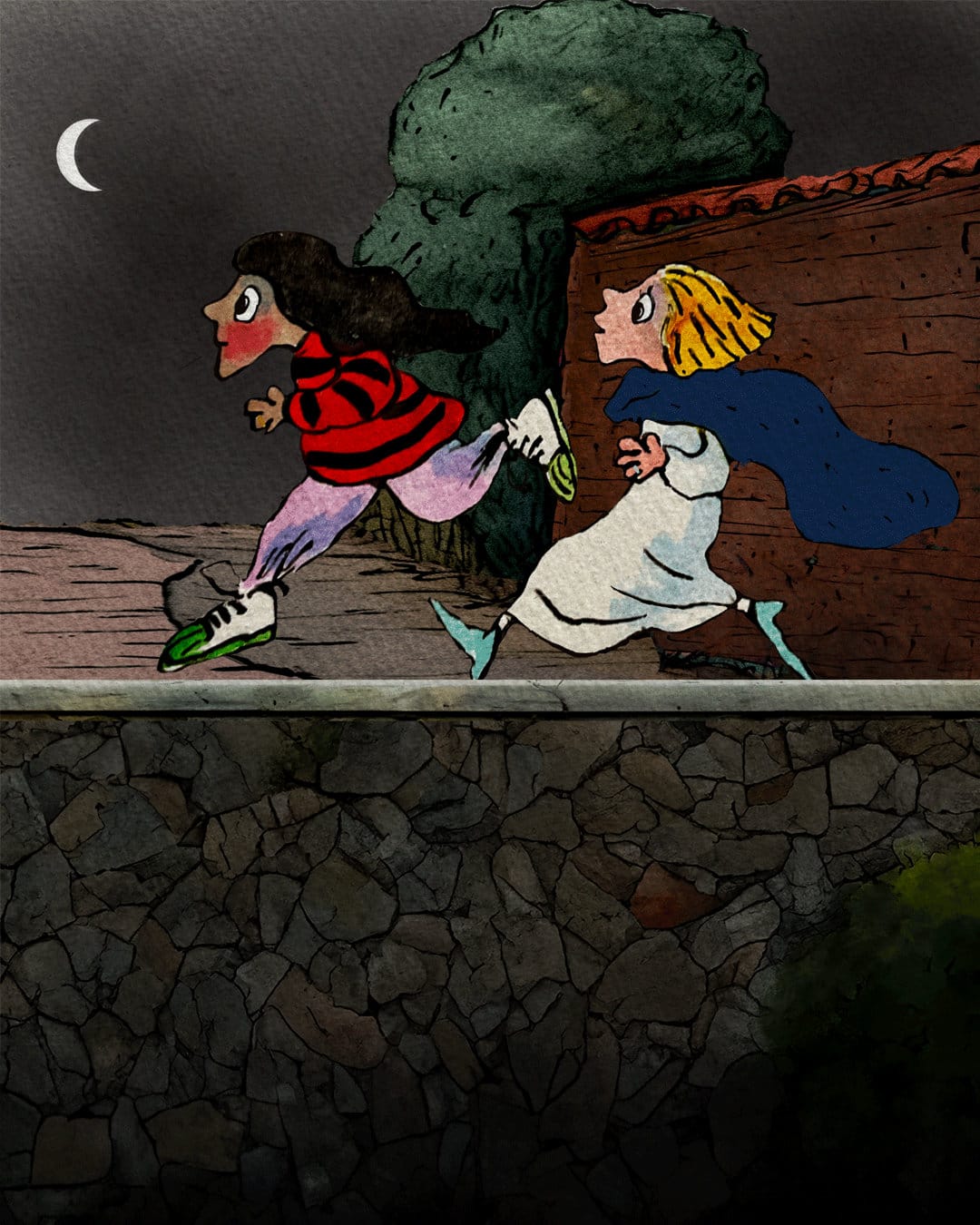
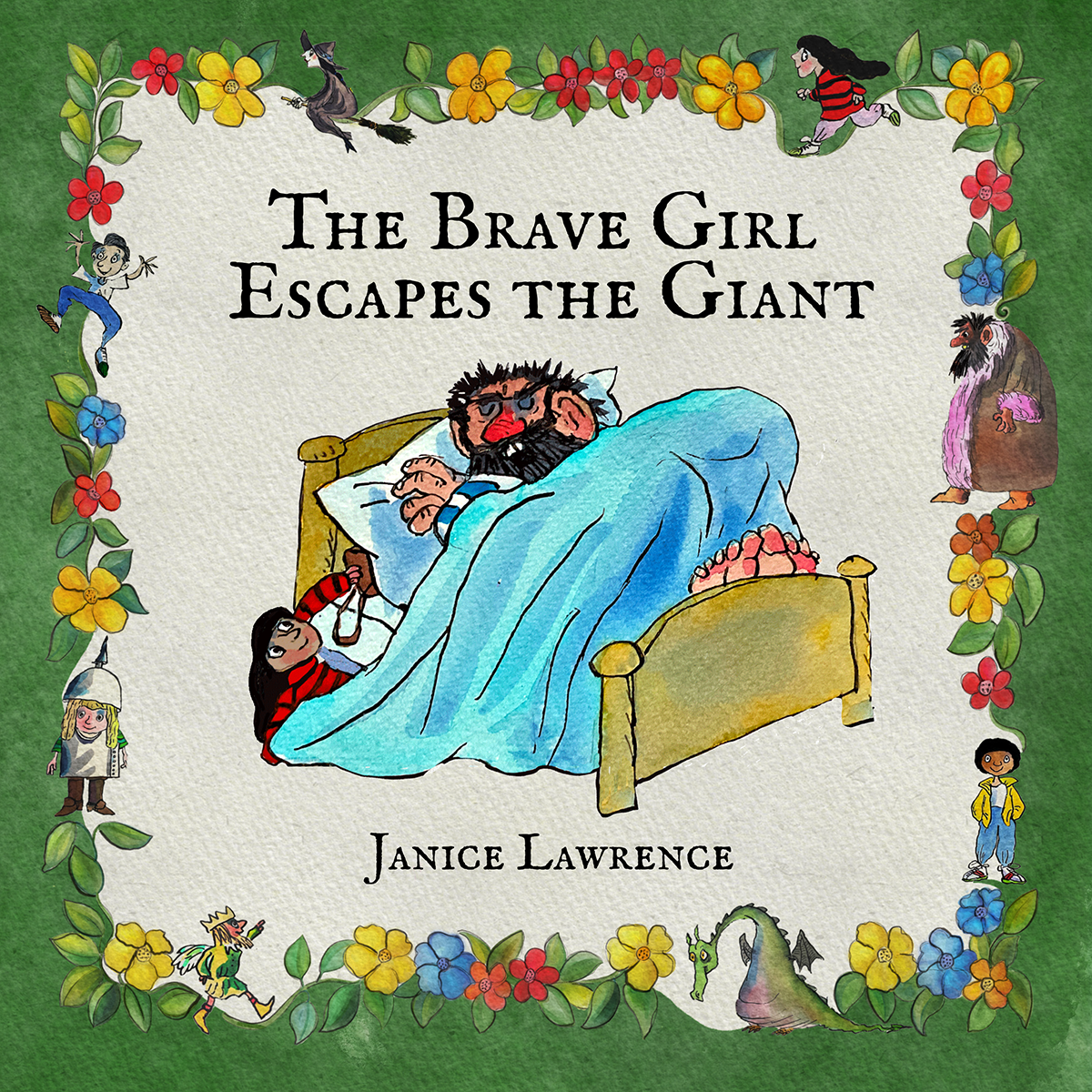
In The Brave Girl Escapes the Giant, the Brave Girl and her sister are as different as night and day. One is courageous and resourceful. The other is beautiful and kind.
Neither sister can solve every problem alone. But together, they accomplish things that would be difficult for either one by herself.
When they encounter an evil sorcerer, the beautiful sister distracts him with her smile while the Brave Girl slips into his house and frees the Fairy Queen’s daughters. Each sister contributes something different, and both contributions are necessary.
The story offers a useful way to think about children who approach problems differently. We don’t need every child to have the same abilities or use the same methods. We need to recognize what each child can do and help them build from there.
That’s true whether we’re teaching arithmetic, reading a story, or helping children learn to work together.
Today’s Free Activity: Fee, Fie, Fo, Fum!
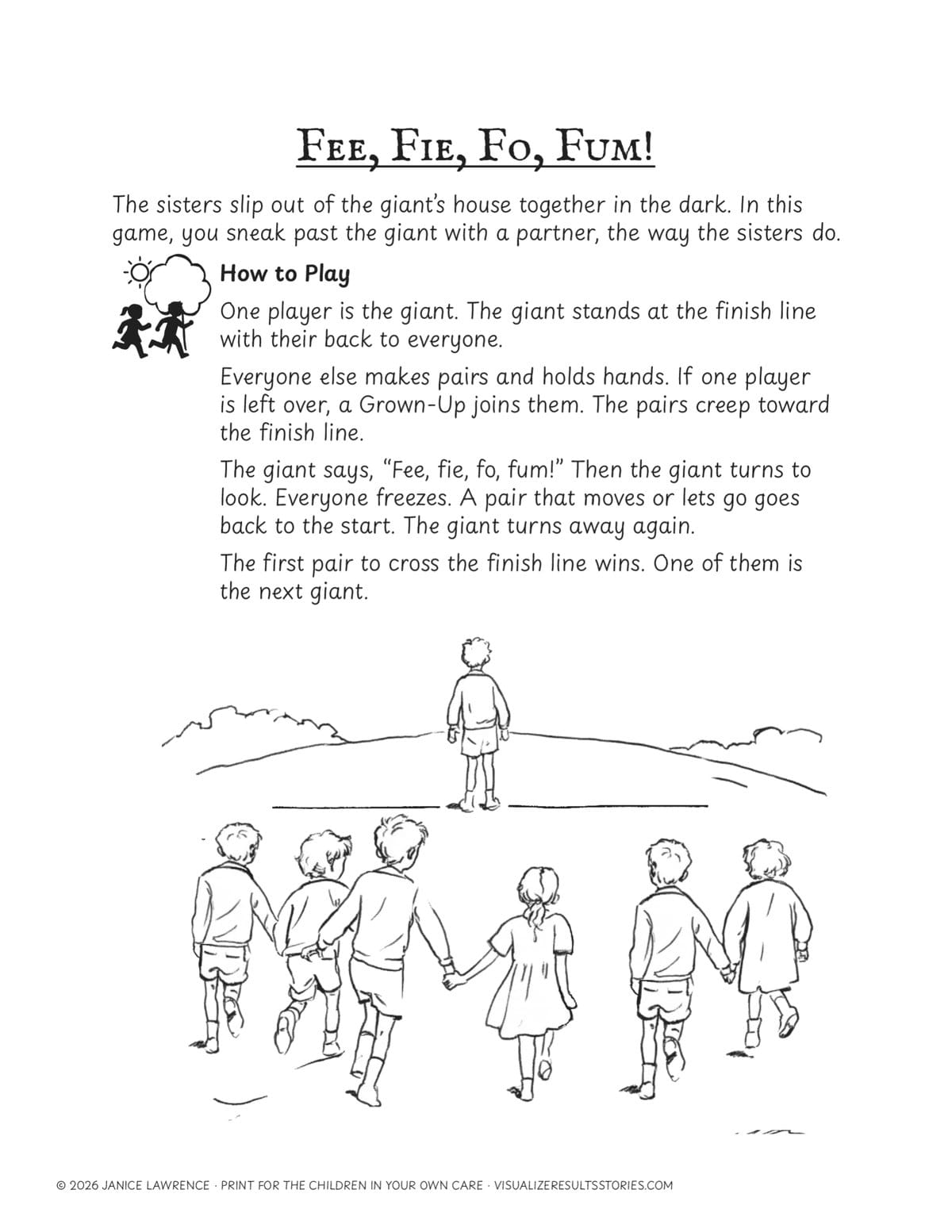
Fee, Fie, Fo, Fum! turns part of the sisters’ adventure into an outdoor movement game. One player is the giant, standing at the finish line with their back to everyone else. The other players work in pairs, holding hands as they creep toward the giant. When the giant calls, “Fee, fie, fo, fum!” and turns around, everyone must freeze. Any pair that moves or lets go starts again. To succeed, children have to watch the giant, coordinate their movements with a partner, and anticipate when to stop. The game gives children a physical way to practice attention, cooperation, planning, and self-control. Those skills help them participate in group activities, work with others, and adjust their behavior when circumstances change. Notice whether your child moves too quickly, waits for their partner, or discovers that moving carefully together works better than racing ahead alone.
Does This Sound Like Your Child?
This activity may be especially helpful if your child:
- Learns more readily through movement than by sitting still. The game gives them an opportunity to practice attention and planning while using their whole body.
- Struggles with the way something is usually taught. A familiar skill becomes a different kind of challenge when it is part of a game.
- Isn’t the fastest or most physically confident child. Moving carefully and working with a partner can be more useful than speed.
- Finds it difficult to coordinate with another person. The game makes cooperation visible because both partners have to move and stop together.
Try It This Week
- Move something your child finds difficult. Try stepping through a number sequence, hopping between spelling words, or acting out the events of a story. See whether movement helps your child make sense of the information.
- Ask what helped. After playing Fee, Fie, Fo, Fum!, ask your child what helped them stay together with their partner. Did they watch each other, move more slowly, or agree on a plan?
- Look for a different thinker. Notice someone in your child’s life who approaches a problem differently. What can your child learn from that person’s way of thinking?