Why Does My Child Give Up So Easily?
Some wins take a long time to arrive.
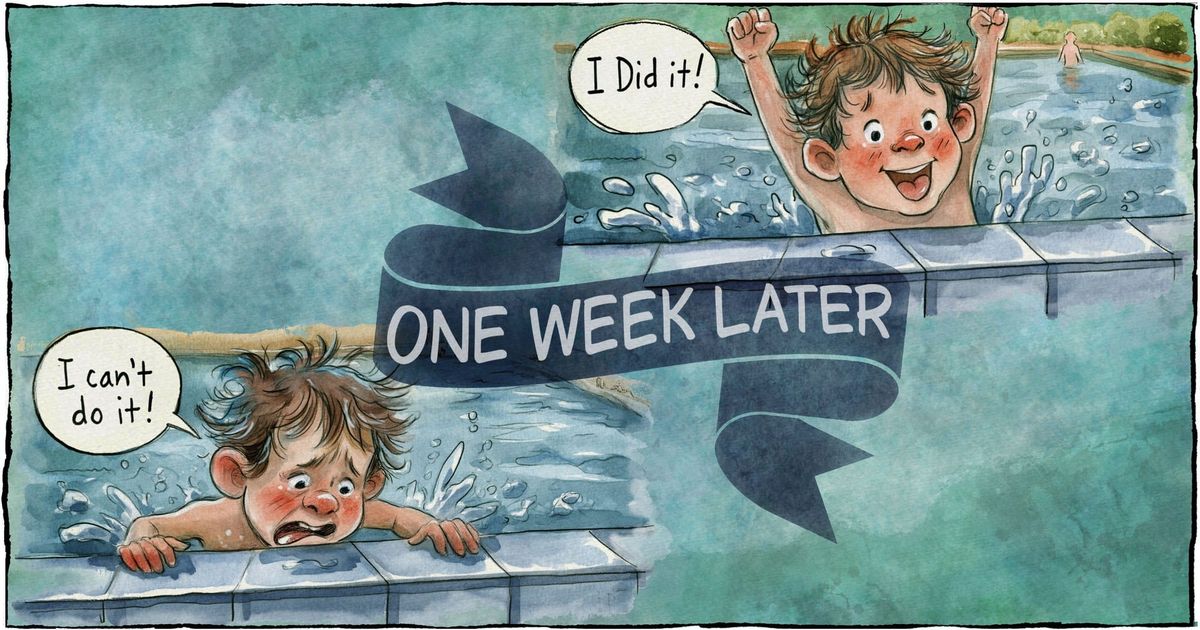
Your child is learning to swim. They want to make it all the way across the pool, but halfway there, they grab the side and announce, "I can't do it!" A week later, they swim the whole distance and can hardly wait to tell you about it.
The victory is easy to see. What about all the kicking, paddling, and sputtering that came before it? Children don't always recognize how much those earlier attempts contributed to their success. Sometimes we need to help them connect what they did with what they finally accomplished.
A Problem and Its Win Are Often Far Apart
Think about how a story works. A problem appears near the beginning, but the solution may not arrive until the last page. To understand the story, your child has to remember the problem, follow what the characters do about it, and recognize how those actions affect the ending.
That's a thinking skill we call Connecting. It helps children understand how one event leads to another, even when the connection isn't immediately obvious. And it's something they can practice while enjoying a good story.
Four Problems, Four Wins
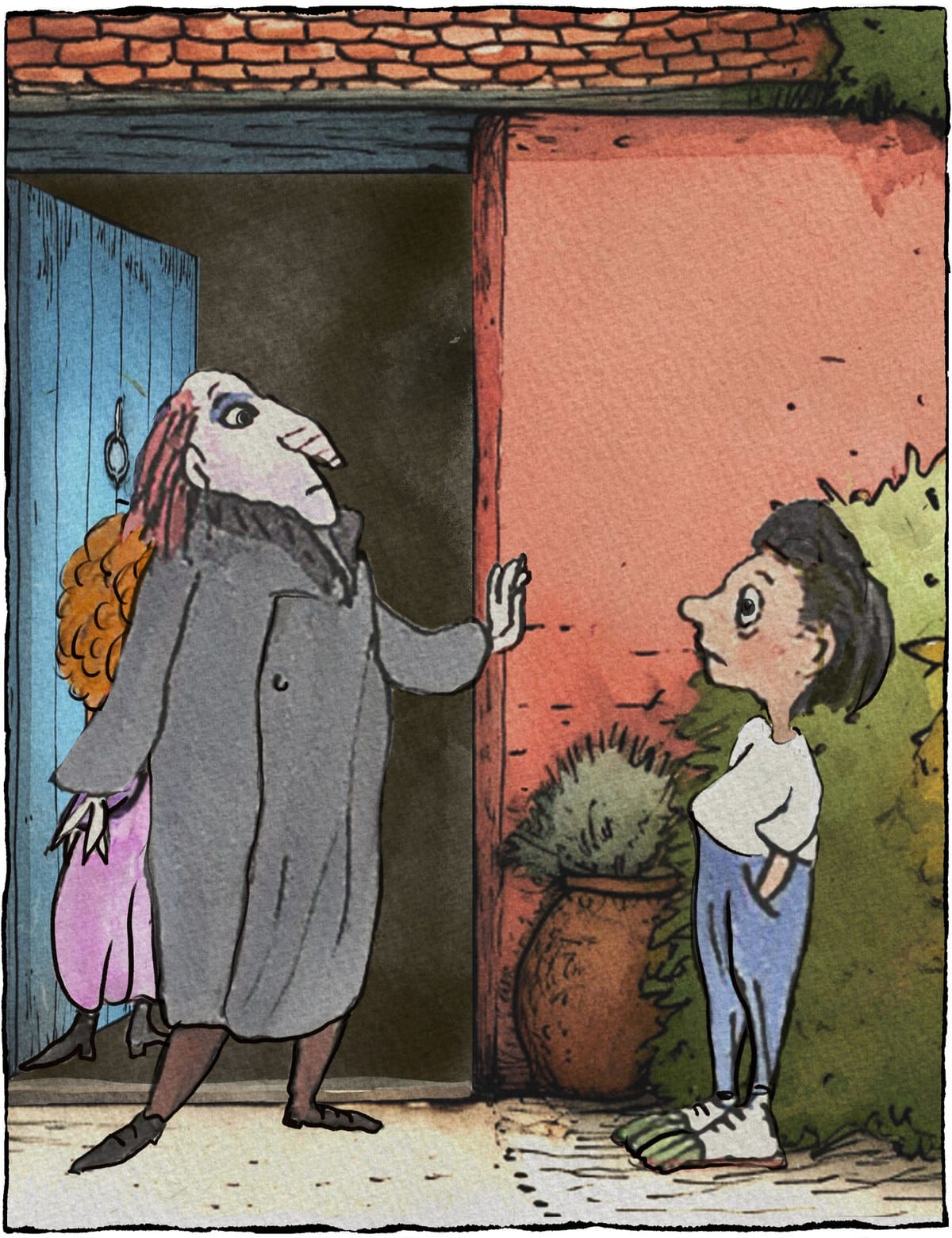
In The Happy Boy Tricks the Dragon, the Happy Boy has more problems than most of us would care to face.
First, he loves a girl who loves him back, but her wealthy father refuses to let her marry a poor fisherman. Then a dragon burns down the town and carries off the girl and her father. Most boys would consider this a disaster. The Happy Boy sees an opportunity.
"Well, maybe this is my chance," he thinks. If he rescues the girl and her father, perhaps the father will change his mind.
On his way to the dragon, the boy meets an old man whose two sons are fighting over how to divide a forest. The Happy Boy suggests that one brother divide it and the other choose first. Problem solved! The grateful father gives him a magic mirror that shows people how others see them.
Then comes the dragon, fifty times bigger than the boy. The Happy Boy tells the dragon he has an even bigger dragon hiding behind a rock. When the dragon charges around the rock, it encounters the mirror and sees itself as others see it, fifty times its actual size. Terrified, it runs away.
The boy rescues the girl and her father, and the father finally agrees to the marriage. The Happy Boy even receives half his lands.
Four problems, four wins. But notice how differently they work out. The old man's problem is solved immediately. The dragon's problem takes a little trickery. And the father's refusal, the first problem in the story, isn't resolved until the very end.
The Happy Boy doesn't solve everything at once. He keeps going, and what he does along the way makes the final win possible.
Today's Free Activity: Problems into Wins
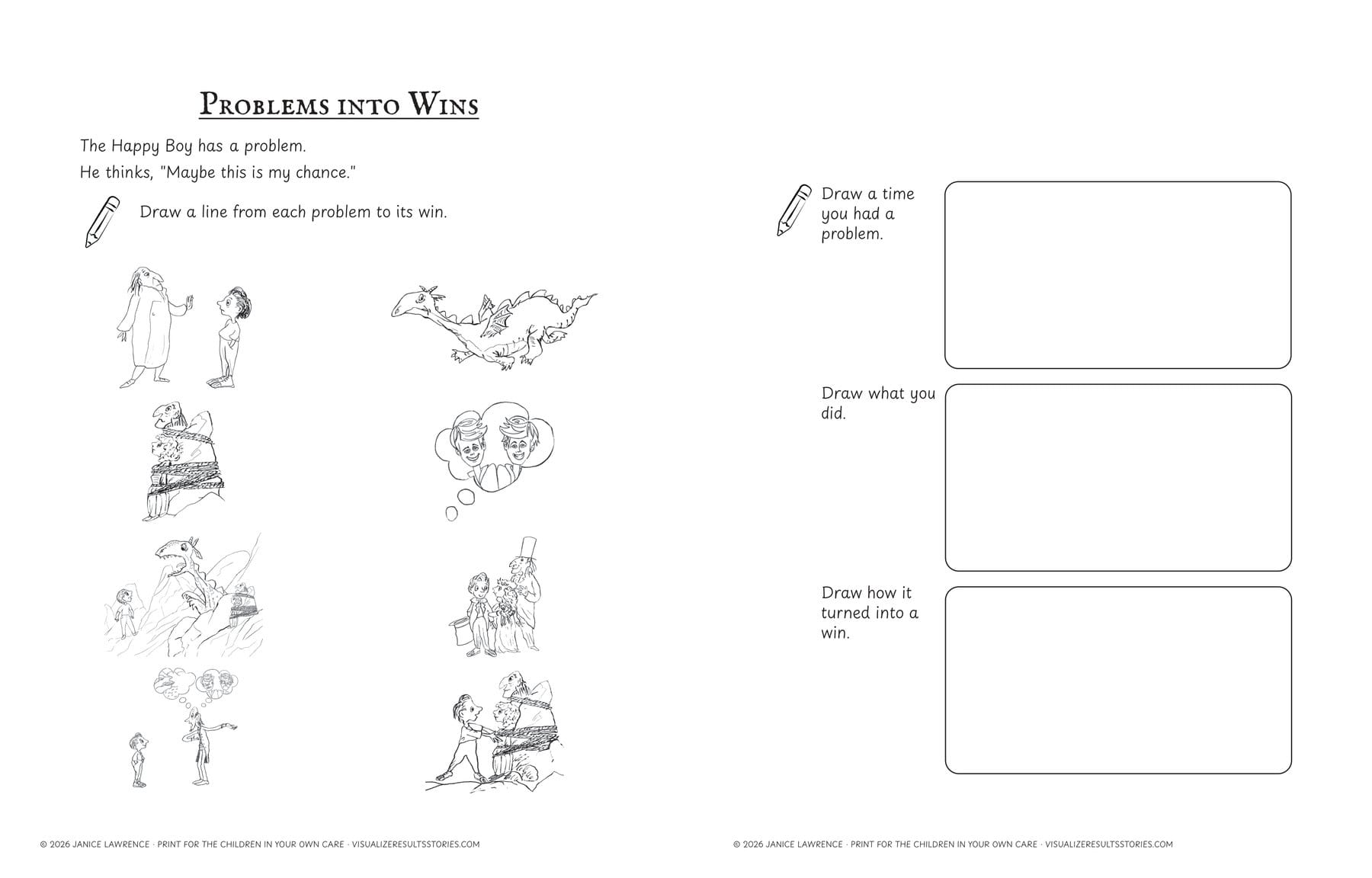
In Problems into Wins, your child matches four problems from the story with pictures showing how they turned into wins. The problems are described above, so you can review them together before starting.
Once your child has drawn the connecting lines, point to the picture of the father refusing the marriage. Ask, "When did this problem finally turn into a win?" It's a good opportunity to notice that the first problem wasn't solved first.
The second page brings the idea home. Your child draws three pictures:
- A time they had a problem.
- What they did about it.
- How the problem turned into a win.
It doesn't have to be a big accomplishment. Finding a lost shoe or finally swimming all the way across the pool is plenty. A pretend problem works, too.
Pay particular attention to the middle picture. Ask, "What did you do?" That's the part children sometimes forget, and it's often where the most interesting thinking happens.
Does This Sound Like Your Child?
My child gives up after the first try. Matching each of the Happy Boy's problems to the win it became shows your child that a problem isn't the end of the story.
My child remembers what went wrong but forgets what they did about it. The second page asks your child to draw a problem of their own, what they did, and how it turned into a win. With all three on one page, the part they did is harder to forget.
My child expects every problem to be solved immediately. The Happy Boy's adventures give you a way to talk about that without making your child the subject of the lesson. Sometimes it's easier to recognize a familiar problem when it belongs to someone else, especially someone who has to deal with a dragon.
Try It This Week
- Ask, "What did you do?" When your child finds a lost toy or frees a stuck zipper, help them notice the steps between the problem and the solution.
- Leave a problem unfinished. Keep a half-finished craft project or tricky puzzle where your child can return to it tomorrow. See what changes when they try again.
- Look for a problem that waits. When reading together, find a problem introduced early in the story that isn't solved until the end. Ask your child when and how it was finally resolved.