What If Your Child Already Understands More Than You Think?
Pictures build comprehension before fluency — and that changes everything for visual learners, late readers, and children with autism, dyslexia, and ADHD

Most children who struggle with reading are not struggling to think. They're struggling to show what they know in a way that the adults around them recognize.
That's a meaningful difference — and it changes everything about how you approach reading together.
What is visual comprehension?

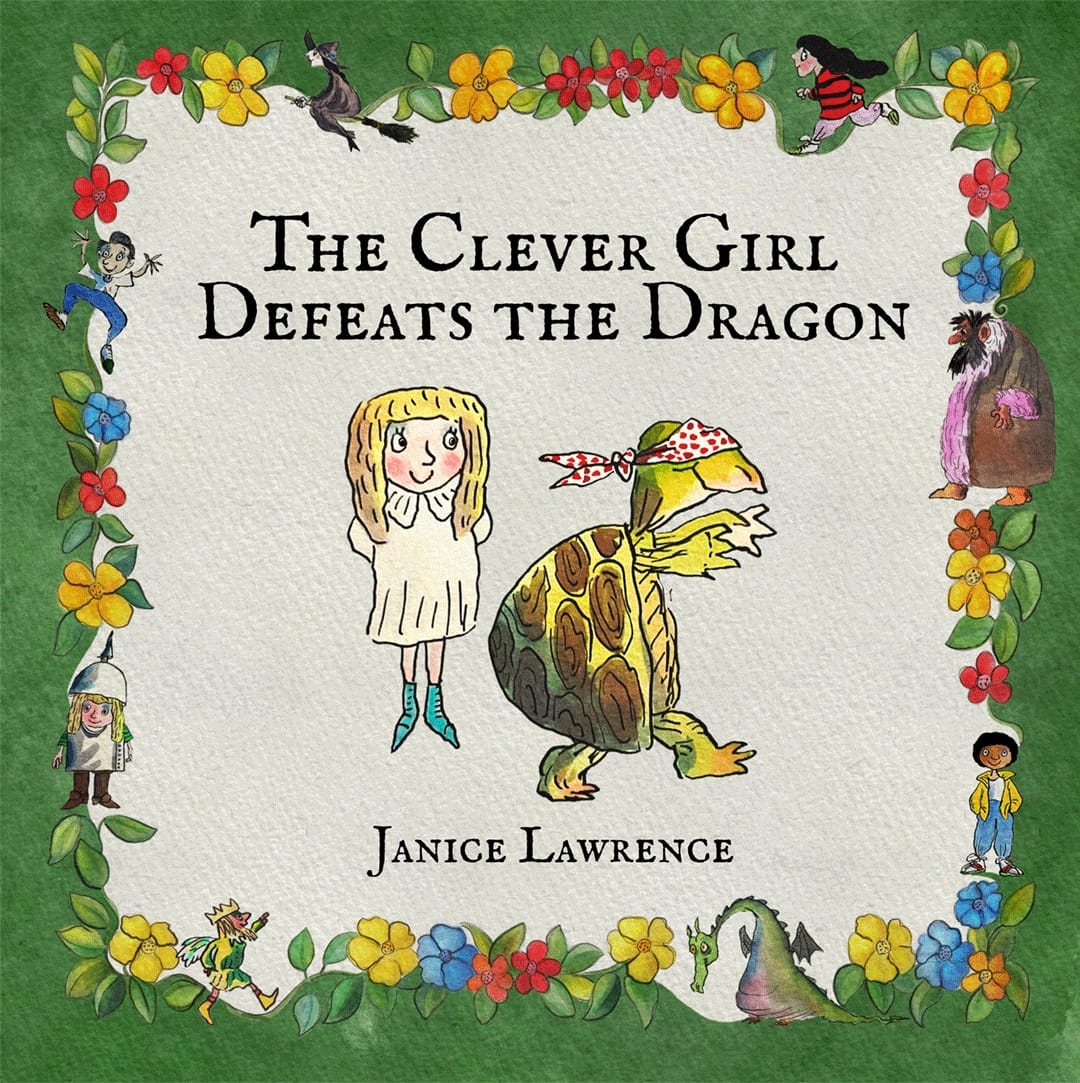
The Clever Girl is a Brave Soldier.
Visual comprehension is the ability to understand what is happening in a story through pictures, before a single word is read. It's not a consolation prize for children who can't decode text. It's a legitimate and powerful form of thinking that many children — particularly visual learners, late readers, and children with autism, dyslexia, and ADHD — rely on naturally.
These children notice things. They read facial expressions, body language, and mood in an illustration the way other children read sentences. They follow the logic of a scene. They sense what is about to happen. They are comprehending — just not in the way we typically measure it.
Why it matters
When a child can't produce the expected response — answer a question, retell the plot, explain a character's motivation — it looks like they weren't paying attention. It looks like they didn't understand. Over time, that misreading becomes a label. And labels have a way of becoming things children believe about themselves.
But what if the problem isn't understanding? What if it's simply that we're asking children to prove what they know in a way that doesn't match how they think?
What this looks like in the book
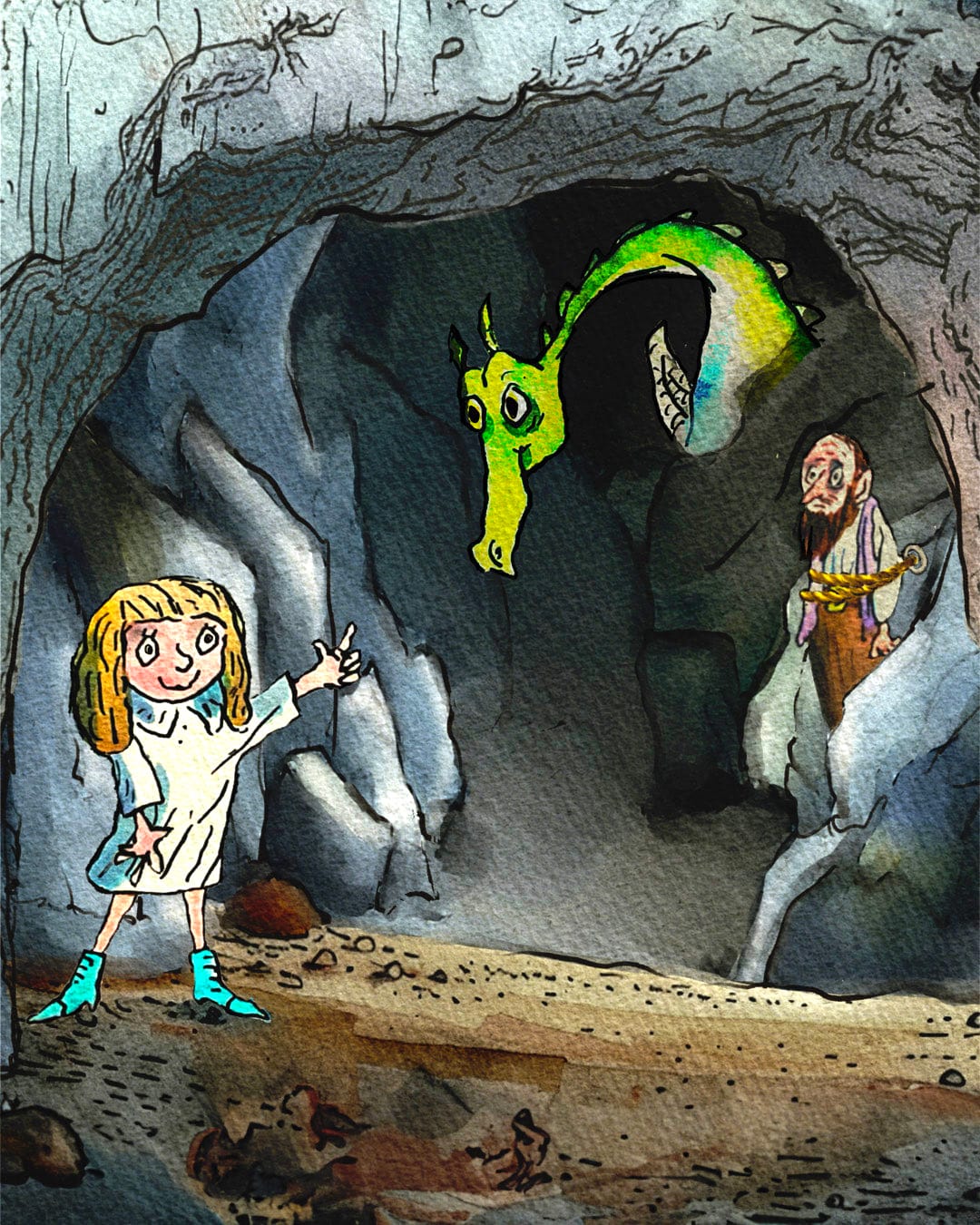
Look at this illustration without reading the text. What do you notice?
A child who has never read a word in their life can still see that the girl is calm when she shouldn't be. That the dragon is curious, not attacking. That someone is in trouble in the back of the cave. They can feel the tension and sense that something clever is about to happen.
That is comprehension. It's just not the kind we tend to measure.
Now imagine asking that child: "What do you see?" And then waiting. Not correcting. Not filling the silence. Just listening to what they notice.
What they tell you — whether in words, a gesture, a point, or a sound — is a window into how they are thinking. And it may surprise you.
Here's why this works
Visual thinkers are often exceptional observers. Children with autism frequently have strong visual memory and pattern recognition. Children with dyslexia often have powerful spatial reasoning and big-picture thinking. Children with ADHD take in enormous amounts of visual information even when they seem distracted. These are real strengths — and a richly illustrated story is one of the few places where those strengths become immediately visible.
Comprehension builds fluency — not the other way around. When a child understands what a story is about, when they care about the characters and want to know what happens next, reading the words becomes meaningful rather than mechanical. Pictures build that desire before words can.
The question changes everything. "What does this say?" puts a barrier between a struggling reader and the story. "What do you see?" removes it. One question measures decoding. The other measures thinking. And thinking is where reading begins.
Try it now
Show your child a picture. Ask what they see. When they respond — however they respond — say: "You figured that out. Tell me more."
That's the whole method. And it works.
Stop 'n' Think
A child who can look at a picture of a girl facing a dragon and sense that she has a plan — that child is already thinking like a reader. What if the only thing standing between your child and reading is being asked the right question?
Want to discover what your child already knows?