What If the Reading Problem Isn't Your Child's Problem?
How the stories we're told about our kids become the stories they tell about themselves. And how to change them.

My nephew couldn't read. He was ten years old and not a word on a page made sense to him. The harder he tried, the more frustrated he became. He was labeled a problem child.
But he could tell you back a story he'd heard once, word for word, with voices. His memory was extraordinary. His imagination was vivid. He wasn't a problem. He was dyslexic.
I am a writer and an illustrator. I don't only think in words. I think in pictures, sequences, and visual patterns. That way of seeing helped me recognize what was really going on. His brain processed information differently. Once we understood that and got him the right help, he flourished. That child who couldn't read a word is now a surgeon.
Understanding how your child processes information is the key to helping them become a kid who loves to read.
The child who understood everything
My son is autistic. He was nonverbal until he was ten. Smart, autistic children are routinely underestimated. It is one of the most painful things a parent can watch.
Before a child learns to talk, you know them instinctively. You know when they are hungry, tired, happy, or frightened. Most parents lose that connection once language arrives. They start relying on words and stop paying attention to their instincts.
Since my son couldn't speak, I never lost my instinctual connection to him. We stayed in touch through actions, emotions, and instinct. As a mom, I always knew what was going on inside him. So I knew he was smart even when everyone else was telling me he was not. Eventually he learned how to speak and we realized that he had been able to read all along. Now he is a filmmaker. He tells stories for a living.
What these two boys had in common
Neither of them was the problem. Both needed someone to stop asking "why can't you read?" and start asking "what do you already understand?"
Adults are comfortable with words. Teachers are trained to measure with tests. When a child can't perform in those ways, the system calls them behind. Delayed. A problem. It rarely stops to ask whether the measurement itself is wrong.
These books exist because the measurement is wrong.
Why I wrote these books
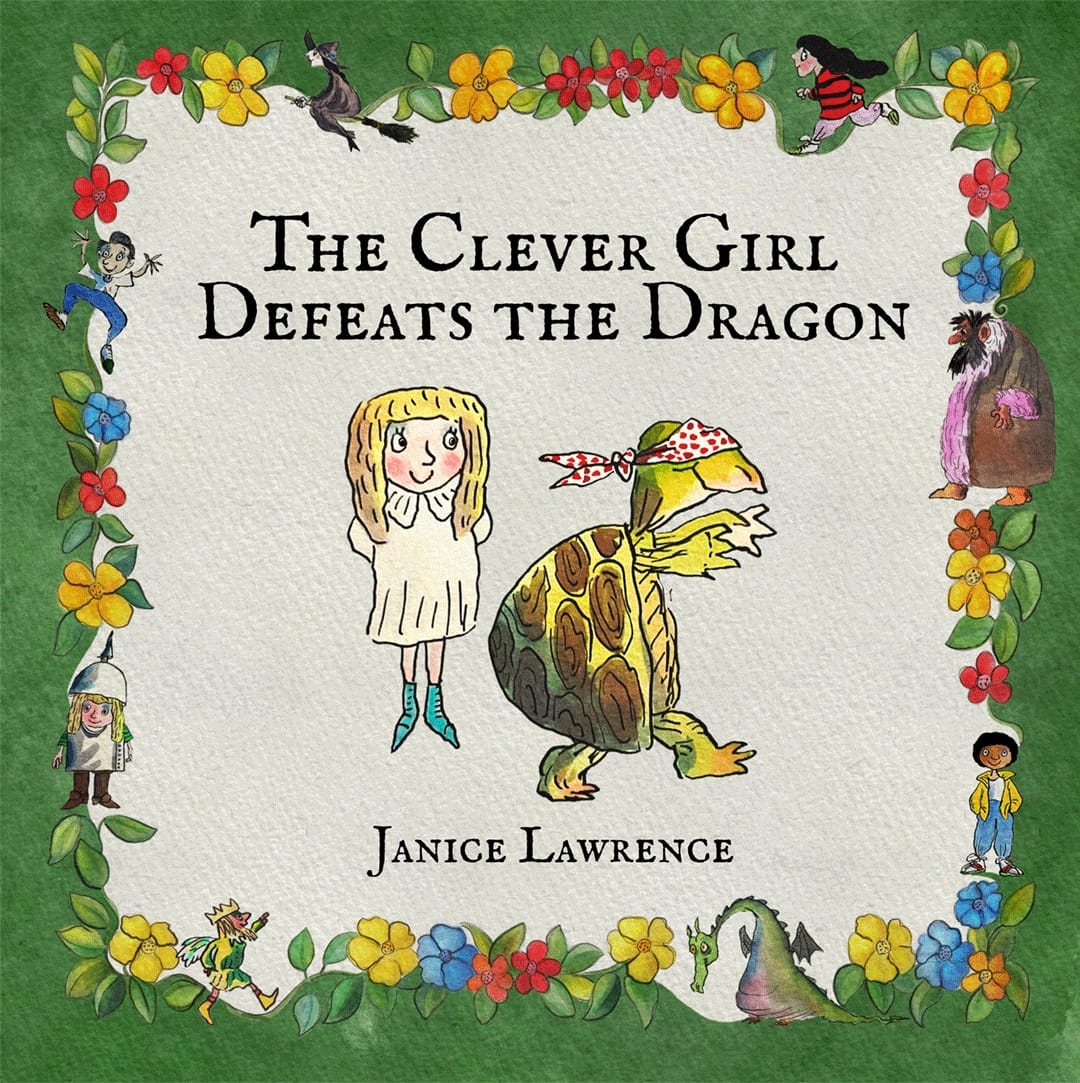
The pictures carry the story because some children can read a picture long before they can read a word. The language is simple because getting a thought out can be hard work. The heroes win through cleverness and kindness because every child who feels powerless in the real world deserves to see someone like them win in the story.
These are fairy tales because fairy tales are the oldest teaching technology we have. The structure is ancient and predictable. The moral is always clear. The hero faces something frightening and finds a way through. Children who feel overwhelmed by the real world find something in that pattern that no worksheet can give them. Safety. Repetition. The knowledge that hard things can be survived. That is not decorative. That is developmental.
Here's why it works
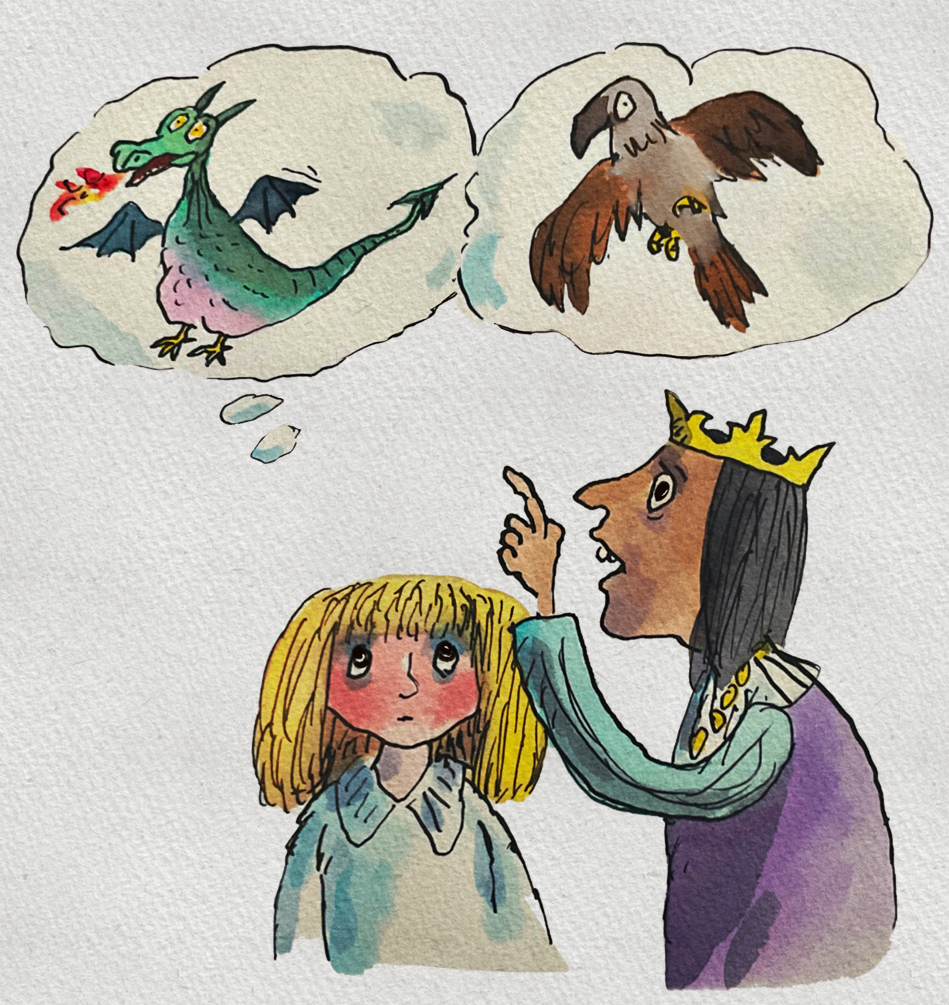
The grateful king tells the Clever Girl the dragon's secret.
Fairy tales build emotional resilience. A child who watches the Clever Girl face a dragon without flinching learns something about their own courage. Not because anyone told them to be brave. Because they watched someone like them be brave and felt it.
Visual stories meet children where they are. For a child who thinks in pictures, a richly illustrated book is not a simplified version of a real book. It is a real book. One built for the way their mind actually works.
The right question unlocks everything. "Why can't you read?" breeds shame. "What do you see?" inspires thinking. One closes a child down. The other opens them up. Every exercise in this curriculum starts with the second question.
Stop 'n' Think
What label has your child been given? Behind. Delayed. A problem. What if the label is wrong?
Ready to find out what your child already knows?