The best therapeutic homework is the kind that feels like playing.
You know what happens to the homework you send home. The parents mean well. They write it down. They put it on the refrigerator. And then the week happens -- the meltdown on Tuesday, the IEP meeting on Wednesday, the complete exhaustion by Thursday -- and the homework stays on the refrigerator.
It is not that they do not care. It is that one more clinical task is one thing too many for a family that is already running on empty.
These are fairy tales. The activities involve coloring, cutting, making faces in a mirror, pretending to be animals, and acting out scenes from stories the child already loves. When a parent sits down with their child to do the homework you sent home, it does not feel like homework. It feels like a good ten minutes together at the kitchen table. That is why they actually do it.
The Professional tier gives speech language pathologists, occupational therapists, behavioral therapists, play therapists, child psychologists, and ABA therapists a searchable library of story-based activities they can use in session and send home with families -- organized by learning difference, adaptable to any therapeutic lens, and genuinely fun enough that families actually do them.
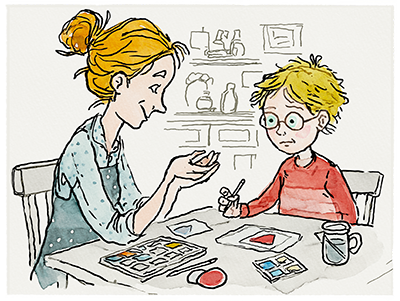
The same activity. Different therapeutic lenses.
In The Shape Shifting Showdown, a learning activity from The Clever Girl Defeats the Dragon storybook, a child and adult stand in front of a mirror together and take turns becoming the animals from the story -- a tiny spider, a fierce lion, a lumbering elephant. The child watches, imitates, and transforms. One of the most powerful things about this exercise is that the mirror eliminates the need for direct eye contact. The child looks at their own reflection, not at the adult across from them. For neurodivergent children and children with anxiety, that small shift changes everything. The pressure comes off. The play begins.
Here is how three different specialists might use the same exercise:
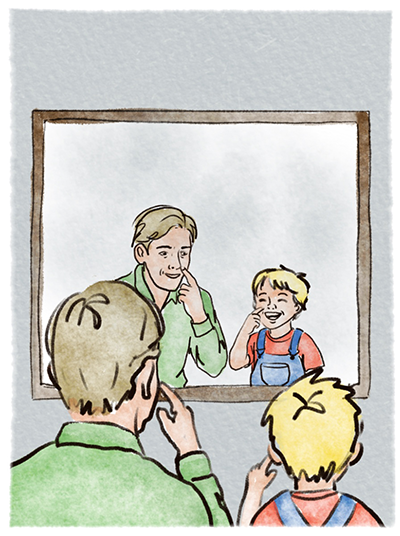
For Speech Language Pathologists — A nonverbal or late-talking child who will not attempt a sound on request will often attempt one when they are pretending to be an animal. The mirror gives them permission. The story gives them a character to hide behind. The SLP gets the vocalization they have been working toward, wrapped inside something that felt like play.
For Occupational Therapists — Becoming a spider requires the child to coordinate a specific intention -- small, low, careful -- with deliberate physical movement. Becoming an elephant requires weight, heaviness, intention in the opposite direction. The activity builds body awareness and motor planning inside a story frame that makes the child want to try again.
For Behavioral Therapists, Play Therapists and Child Psychologists — A child processing fear or trauma can practice feeling big. Becoming a lion in the mirror is safe. It is just pretend. But the felt experience of standing tall, making a fierce face, and taking up space is real -- and it transfers. ABA therapists will find the same story distance useful for approaching difficult emotional territory without direct confrontation.
For all of them — The Grown-Up Guide explains the pedagogical intent behind the activity. You will recognize immediately how it maps to your therapeutic goals. Adapt it, extend it, or use it exactly as written. Either way it is already done for you.
How therapists use this curriculum
In session — Read a short passage from the featured story, then work through an activity together. The story gives the child a character to relate to, a situation to respond to, and a safe distance from their own experience. The activity gives the therapist a structured way in.
As take-home activities — In the last few minutes of a session, search the database by your client's learning difference or therapeutic goal, find two or three relevant activities, print them out, and hand them to the parent with the Grown-Up Guide attached. The guide tells the parent exactly what to do and why. You spend two minutes. The family gets a week of structured, purposeful play at home. And because it involves a story they already love and activities that are genuinely fun, they actually do it.
As a client learning path using the app — Build a profile for each client child in the app. Assign a learning path based on their therapeutic goals and learning difference. The app tracks their progress through the activities and gives the family one-click access to the next relevant exercise -- without the parent having to manage files, remember where they left off, or ask you what comes next. For practices working with multiple client families, this turns the curriculum from a resource library into a structured, trackable part of your therapeutic workflow.
What the Professional tier includes
The complete curriculum library — Every character month, every activity, every Grown-Up Guide. Four complete character months at launch with more added every month. Search by learning difference, by skill, or by story to find what fits your client right now.
Searchable database by learning difference and therapeutic goal — Every activity is tagged by condition -- dyslexia, ADHD, autism, CAPD, social delay, anxiety, and more. Find what fits a specific client in seconds, not sessions.
Print licensing for practice use — Licensed to print and use with multiple clients in your practice. Copy and distribute activities to client families legally. No gray area, no per-copy cost, no copyright concerns.
Grown-Up Guides for every activity — Written for the non-specialist adult. You will recognize the therapeutic intent immediately. Your client families will have everything they need to run the activity at home without calling you to ask how.
App access for client management — Build learning paths by client, track progress through the curriculum, and give families one-click access to their next activity. A cleaner, more organized way to manage the take-home side of your practice.
Homework they will actually do. Because it feels like playing.
Ready to bring this into your practice?
$29 a month or $249 a year. Print licensed for use with all your clients. Cancel any time.
Start Professional — $29/month